Quick answer
Swap the cabinet full of sprays for a handful of cheap ingredients. 12 natural cleaning recipes with exact ratios, what each one is safe on, and the mixes that are never safe.
Contents
Most of what cleans a home comes down to five cheap ingredients. A bottle of vinegar, a box of baking soda, some castile soap, a little dish soap and a lemon can handle almost every surface you own, for a fraction of the price of name-brand sprays.
The catch is ratios and safety. Mixed wrong, a homemade cleaner either does nothing or, in a few cases, turns dangerous. Here are 12 natural cleaning recipes that actually work, the exact amounts, what each one is safe on, and the combinations you should never mix.
Before You Start: 5 Rules
- Label every bottle. Write what is in it and the date you mixed it. An unlabeled bottle is how accidents happen.
- Test a hidden spot first on any surface you are unsure about, especially stone, wood and painted finishes.
- Natural does not mean disinfectant. These recipes clean, which means they remove dirt and most germs with them. When someone is sick or you have handled raw meat, use an EPA-registered disinfectant instead (EPA Safer Choice).
- Never mix randomly. See the never-mix list below. Some combos release toxic gas.
- Mix small batches. Homemade cleaners have no preservatives, so make what you will use in a few weeks.
The 5 Ingredients That Do Most of the Work
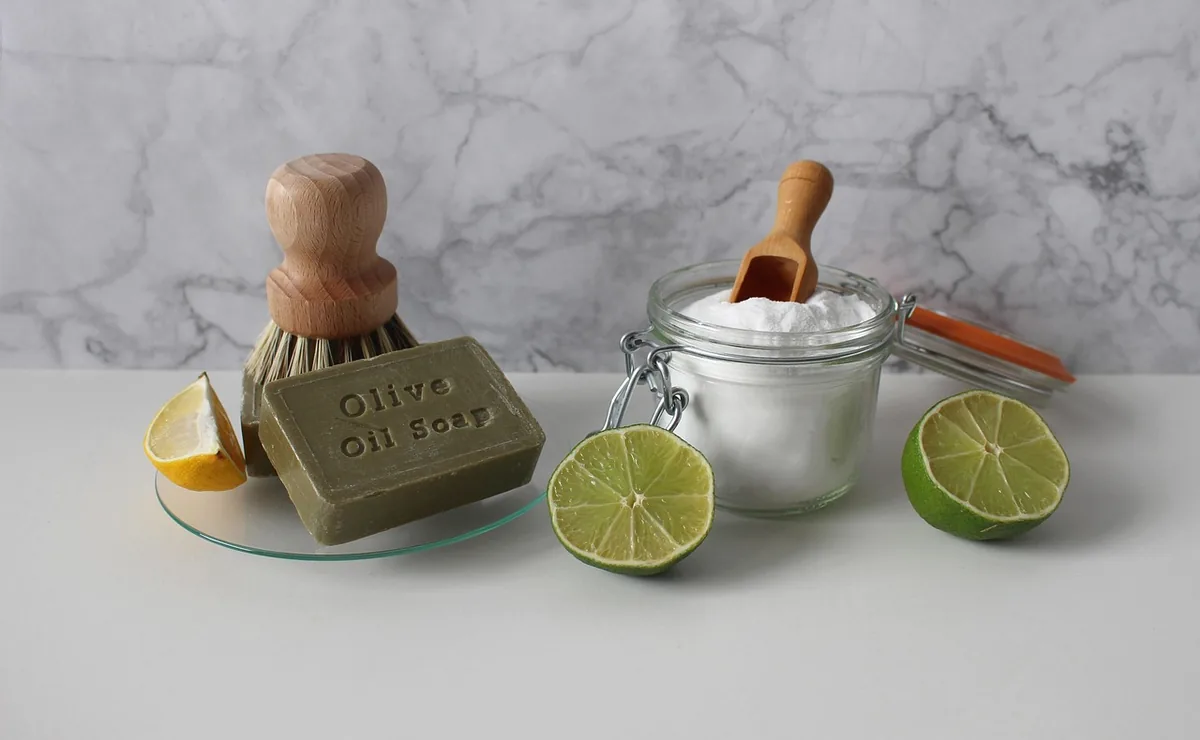
- White vinegar (about 5% acidity): cuts hard water, soap scum, grease and odors. Keep it off stone, hardwood and screens.
- Baking soda: a gentle abrasive and deodorizer. Great as a soft scrub.
- Castile soap: a plant-based liquid soap that actually lifts dirt. Best for floors and general washing.
- Dish soap: a few drops boost grease-cutting in any spray.
- Lemon: natural acid and fresh scent for sinks and disposals.
Optional extras: rubbing alcohol (streak-free glass, fast drying), hydrogen peroxide (stain help, in its own dark bottle), and a few drops of essential oil for scent. Skip essential oils if you have pets, since some are toxic to cats and dogs.
12 Homemade Cleaning Recipes
1. All-purpose spray
1 cup water, 1 cup white vinegar, a few drops of dish soap in a labeled spray bottle. For counters (not stone), appliances and painted surfaces. Our vinegar cleaning guide has more on where vinegar shines.
2. Glass and mirror cleaner
2 cups water, 1/2 cup vinegar, 1/4 cup rubbing alcohol. Wipe with microfiber for a streak-free finish. The alcohol speeds drying so you get fewer streaks.
3. Soft scrub
1/2 cup baking soda plus enough castile soap or dish soap to make a paste. Scrubs sinks, tubs and stovetops without scratching. Rinse well.
4. Soap scum spray
Warm 1/2 cup vinegar slightly, add 1/2 cup dish soap, and spray on glass shower doors and tile. Wait 15 minutes, then scrub and rinse. More in our bathroom cleaning hacks.
5. Wood-safe floor cleaner
1 gallon warm water plus 1 tablespoon castile soap. No vinegar, which can dull wood finishes. Use a well-wrung mop so the floor dries fast.
6. Grease-cutting kitchen spray
1 cup water, 1 cup vinegar, 1 teaspoon dish soap. For sticky cabinet fronts and backsplashes. Test painted wood on a hidden spot first. See more kitchen cleaning hacks.
7. Toilet bowl fizz
Sprinkle 1/2 cup baking soda in the bowl, add 1 cup vinegar, let it fizz for 10 minutes, then scrub. The fizz is mostly for scrubbing loose; the real cleaning is the brush.
8. Garbage disposal fresheners
Fill an ice cube tray with lemon juice (or vinegar) and water, freeze, then grind a cube or two. It knocks grime off and freshens the smell. It does not sharpen anything, since disposals have no blades.
9. Carpet and fabric deodorizer
Sprinkle baking soda over the carpet or couch, leave 15 minutes to overnight, then vacuum. Test colored fabric first.
10. Microwave steam cleaner
1 cup water and 1 tablespoon vinegar in a microwave-safe bowl. Heat 3-5 minutes, keep the door shut 2 more, then wipe. Dried splatters wipe right off.
11. Fabric softener swap
1/2 cup white vinegar in the softener slot rinses out leftover detergent and leaves towels softer. Clothes do not smell like vinegar once dry. More in our laundry hacks.
12. Stainless steel polish
Wipe with a little vinegar on a cloth to clean, dry it, then buff a few drops of olive oil along the grain for shine.
What Each Ingredient Is Safe On
| Ingredient | Great for | Never use on |
|---|---|---|
| White vinegar | Glass, chrome, counters, laundry | Granite, marble, hardwood, screens, cast iron |
| Baking soda | Sinks, tubs, ovens, odors | Soft aluminum, glossy coatings (can scratch) |
| Castile soap | Floors, general washing | Mixing directly with vinegar (it curdles) |
| Dish soap | Grease, dishes, spray boost | Dishwashers (too many suds) |
| Lemon | Disposals, cutting boards, brass | Natural stone (acid etches) |
Combinations You Should Never Mix
- Vinegar + bleach. Releases chlorine gas, which can seriously harm your lungs. U.S. poison centers field thousands of these calls a year (Poison Control).
- Bleach + ammonia (found in some glass cleaners). Makes toxic chloramine vapors.
- Vinegar + hydrogen peroxide in the same bottle. Creates peracetic acid, which can irritate skin, eyes and lungs. Use them one after the other, not combined.
- Castile soap + vinegar. Not dangerous, just useless. The acid breaks the soap into a curdled white mess.
When in doubt, use one cleaner, rinse, then use another.
How Long Do Homemade Cleaners Last?
| Mix | Shelf life |
|---|---|
| Vinegar and water sprays | A few months |
| Anything with dish or castile soap | 1-2 weeks (make small batches) |
| Baking soda paste | Mix fresh each time |
| Citrus or lemon mixes | About 1 week in the fridge |
Cloudiness, separation or an off smell means it is time to mix a fresh batch.
Frequently asked questions
Do natural cleaners actually disinfect?
Is vinegar safe on all surfaces?
Can I just add essential oils for scent?
Are homemade cleaners cheaper than store-bought?
Why did my castile soap and vinegar cleaner turn white and clumpy?
The Bottom Line
You do not need a cabinet full of sprays. Keep an all-purpose vinegar spray, a jar of baking soda soft scrub and a bottle of castile floor cleaner, and you can clean most of the house. Measure your ratios, label every bottle, never mix bleach with anything, and treat these as cleaners rather than disinfectants. For a plan to use them, see our weekly cleaning schedule.