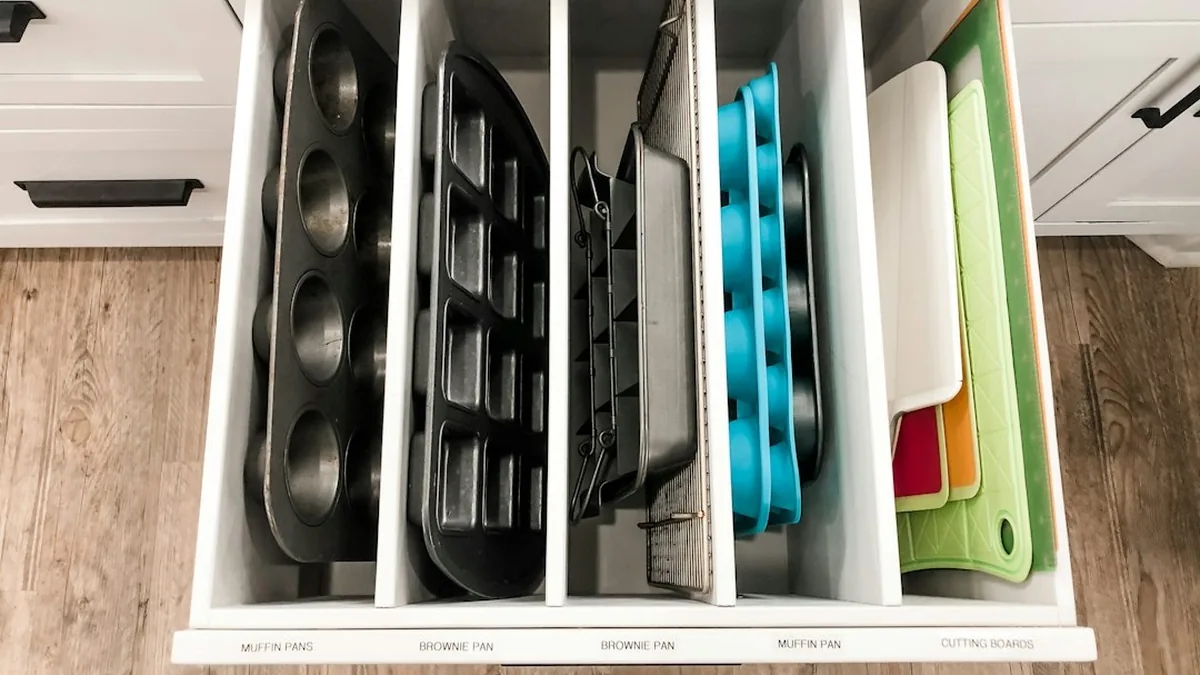
Quick answer
The cabinet under the sink is awkward, dark and full of pipes, so it turns into a dumping ground. 14 under-sink organization ideas that work around the plumbing and use every inch.
Contents
The cabinet under the sink is the most awkward storage in the house. It is dark, it is deep, and a tangle of pipes runs right through the middle of it. So it usually becomes a graveyard of half-empty bottles and forgotten sponges.
It does not have to. With a few cheap additions that work around the plumbing, the under-sink cabinet can hold twice as much and stay tidy. Here are 14 under-sink organization ideas for both the kitchen and the bathroom.
Start by Emptying and Sorting
Pull everything out, wipe the cabinet, and sort what you find. Toss empties and expired products, group what is left, and be honest about duplicates. Our decluttering checklist covers the sorting method if the pile is big.
While it is empty, consider lining the base with a wipeable liner or a cheap boot tray. It catches drips from leaks and makes future spills easy to clean.
Work Around the Pipes
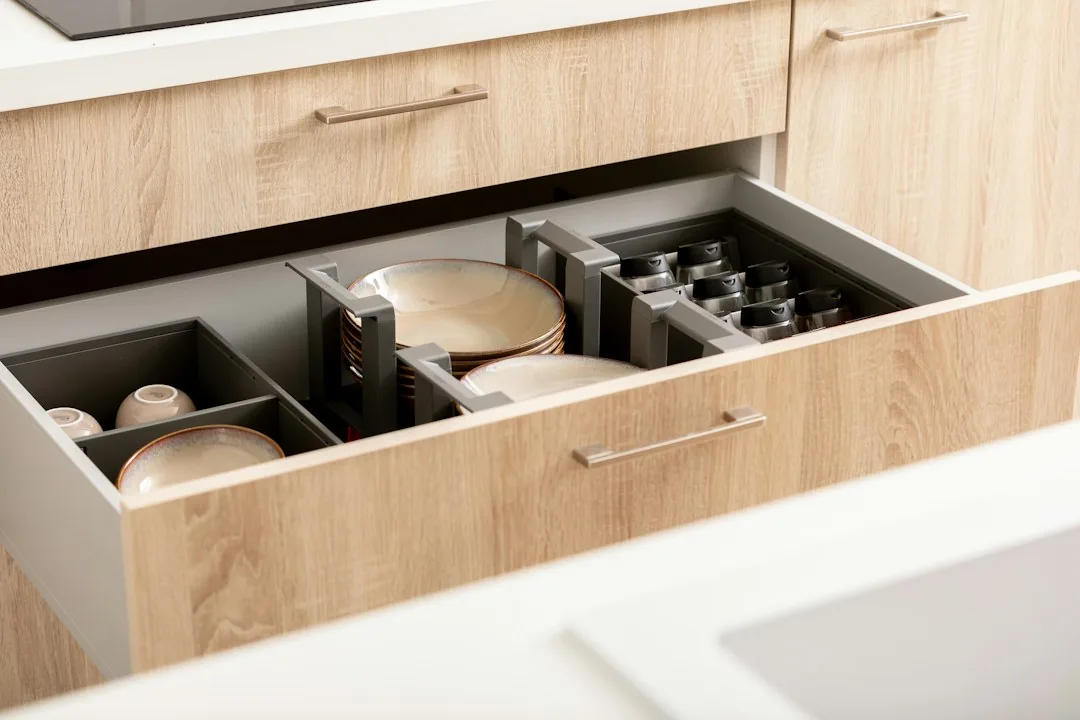
The pipes are the whole challenge. These ideas are built around them.
1. Use U-shaped or under-sink shelves
A pull-out or stacking shelf designed with a notch or U-shape fits around the pipe and doubles your vertical space. This is the single best buy for an under-sink cabinet.
2. Add pull-out bins or drawers
Bins that slide out like drawers let you reach the back without unloading the front. Pick narrow ones that sit on either side of the pipes.
3. Group small items in caddies
A caddy or a lazy Susan keeps little bottles from getting lost in the depths and lets you pull the whole group forward at once.
Use the Cabinet Door
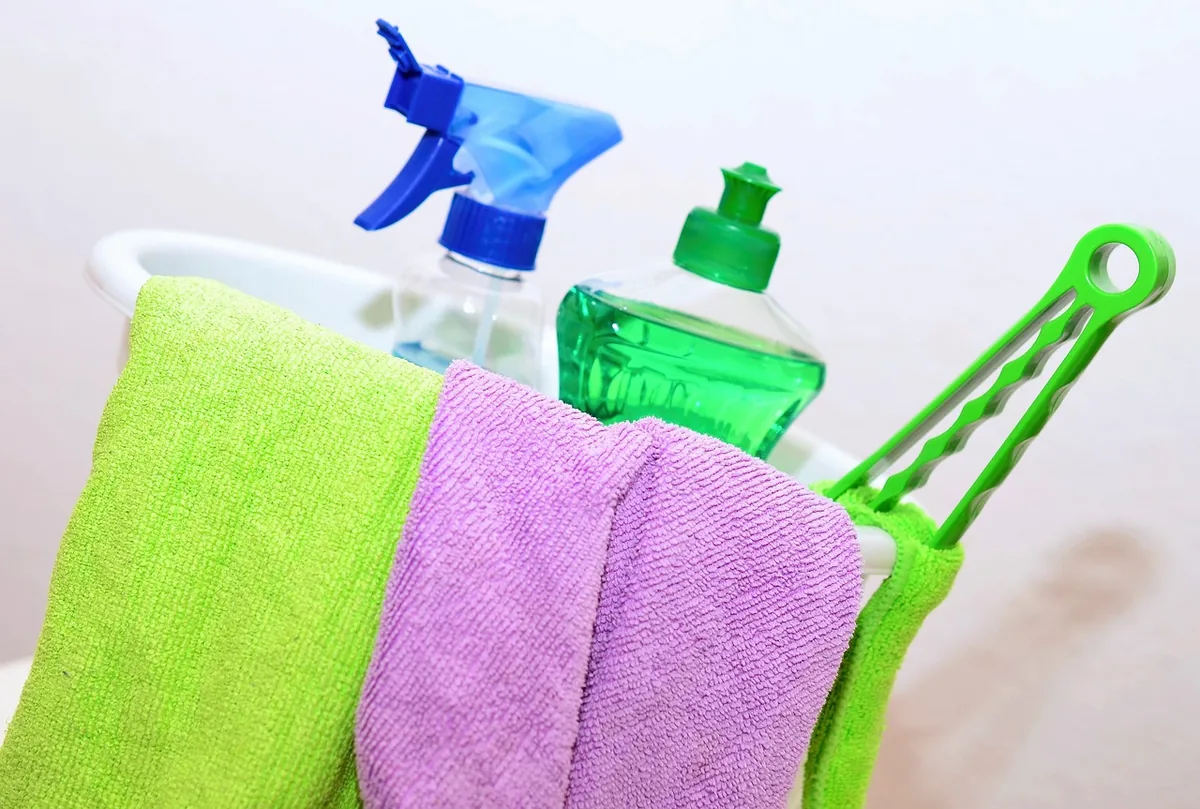
The inside of the door is free storage most people ignore.
4. Hang a tension rod for spray bottles
A tension rod across the cabinet holds spray bottles by their triggers, so they hang instead of crowding the floor of the cabinet.
5. Mount an over-the-door organizer
A wire or plastic rack on the door holds sponges, brushes, gloves and small bottles.
6. Add adhesive hooks
Hooks on the door hold dusters, scrub brushes and a dustpan.
Use the Height
7. Stack clear containers
Clear stacking bins let you use the full height and still see what is inside.
8. Add a second tier with risers
A small shelf riser creates a second level for shorter items, so you are not wasting the air above them.
Kitchen-Specific Ideas
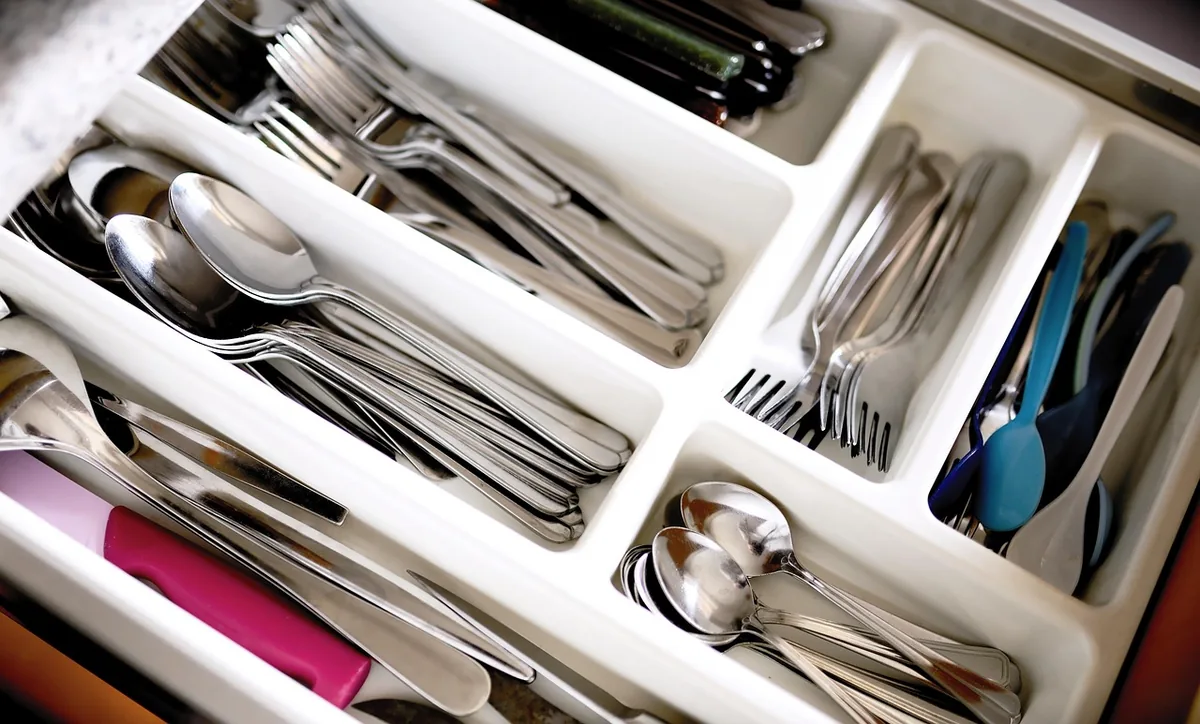
9. Keep a dedicated cleaning caddy
One portable caddy for your everyday kitchen cleaners means you can grab it and carry it to wherever you are cleaning. More kitchen storage wins are in our small kitchen organization ideas.
10. Store bags and wraps upright
A file organizer or a narrow bin holds trash bags, foil and plastic wrap standing up, so they do not slide around.
11. Add a pull-out trash or recycling bin
If the cabinet is big enough, a slim pull-out bin keeps the trash hidden and frees up floor space.
Bathroom-Specific Ideas
12. Use tiered bins for toiletries
Stackable, tiered bins hold backups of shampoo, soap and toilet paper without tipping over.
13. Corral hair tools
A heat-safe holder or a simple bin keeps the hair dryer and straightener cords from tangling. Keep anything hot fully cooled before it goes away.
14. Keep daily items at the front
Store what you reach for every day at the front and the backups behind. For keeping the rest of the room clean, see our bathroom cleaning hacks.
A Safety Note on Storing Cleaners
If there are children or pets in the home, the under-sink cabinet is the riskiest spot for cleaning products. Move anything toxic up high and locked away, and use a childproof latch on the cabinet. Keep products in their original labeled bottles, never in food containers (Poison Control).
Keep It Tidy
The system only lasts if you maintain it. Do a quick reset every month or two: toss empties, wipe for leaks, and put stray items back in their bins. The same labeling habit that runs through our home organization hacks works here, so everyone knows where things go.
Frequently asked questions
How do I organize under the sink with pipes in the way?
What should I not store under the sink?
How do I use the cabinet door for storage?
What is the best way to protect the cabinet from leaks?
How often should I reorganize under the sink?
The Bottom Line
The under-sink cabinet works when you stop fighting the pipes and start working around them: U-shaped shelves for height, pull-out bins for reach, and the door and a tension rod for everything else. Keep toxic products up high and locked if you have kids or pets, line the base against leaks, and reset it every month or two. For the rest of the house, our home organization hacks use the same ideas everywhere.