Quick answer
To get stains out of carpet, act fast: blot liquids with a white cloth, scoop up solids with a spoon, and never scrub. Test your cleaner in a hidden spot, then dab a mild solution of 1/4 teaspoon dish soap in 1 cup of lukewarm water onto the stain, working from the outside in. Follow with a white vinegar solution for wine, coffee or gravy, rinse with plain water, and dry the spot under a weighted stack of paper towels.
Contents
The holidays are hard on carpet. Between a glass of red wine that tips over during the toast, a gravy boat that drips on the way to the table, a candle that splatters wax and a week of guests tracking in winter mud, your floors take more abuse from Thanksgiving to New Year’s than they do for months.
The good news is that most fresh spills come out if you know what to do in the first few minutes. This guide covers how to get stains out of carpet with simple supplies you probably already own, plus stain-by-stain fixes for the messes that show up most during the holidays. The methods follow guidance from The Carpet and Rug Institute (CRI), the carpet industry’s trade group, and from university extension specialists.
The Golden Rules for Any Carpet Stain
Before you reach for a product, remember that technique matters as much as the cleaner. These rules apply to nearly every spill:
- Act quickly. CRI warns that delaying can turn a spill into a permanent stain (CRI). Most carpet sold today has a stain-resistant finish, which Purdue Extension notes gives you a good chance of removing spots if you treat them promptly (Purdue Extension).
- Blot, don’t scrub. Scrubbing can distort the pile, damage fibers and spread the stain, according to Utah State University Extension (USU Extension). CRI also advises against using a brush, since bristles can fray the carpet (CRI).
- Use white cloths or plain white paper towels. Printed or colored towels can transfer ink or dye onto damp carpet (CRI).
- Test first. Try any solution in a closet or behind a sofa, then press a white cloth on the spot and check for color transfer or fiber damage before you treat the stain (USU Extension).
- Work from the edges toward the center so you don’t make the stain bigger (CRI).
- Less is more. CRI says never to use solutions stronger than recommended, and to rinse well, because leftover residue attracts dirt and makes the spot look dingy again (CRI).
Build a Holiday Spill Kit Before Guests Arrive
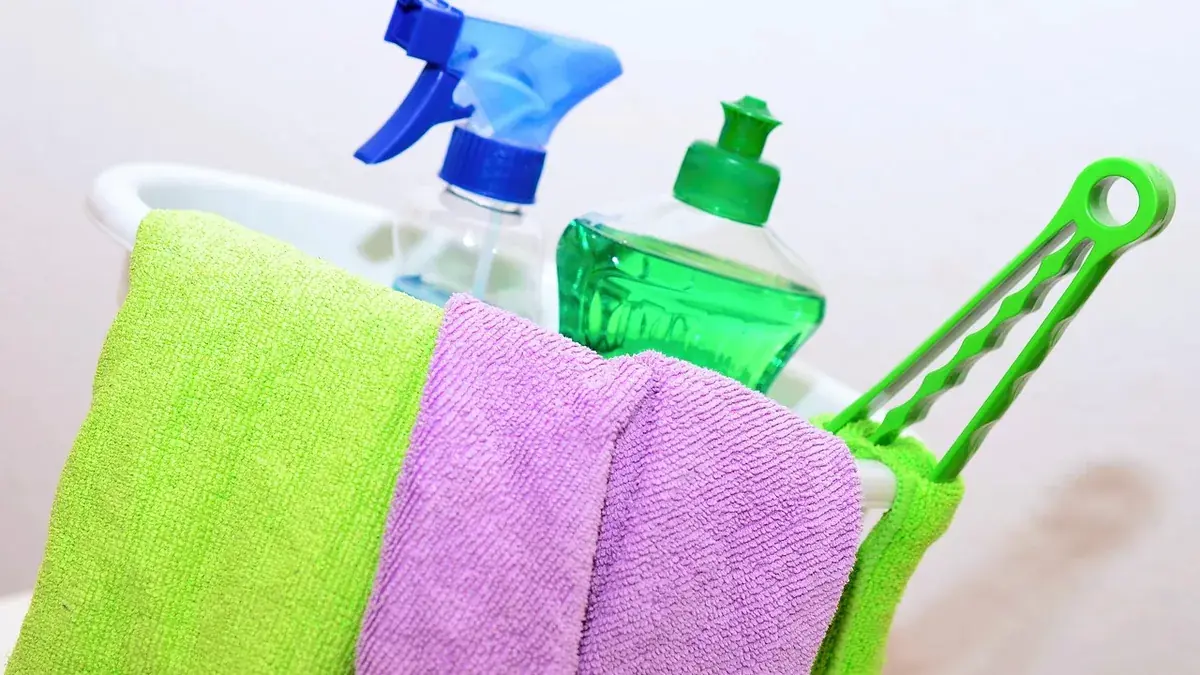
Spills always happen at the worst moment, so put a small kit together now and keep it in a closet near the dining room. CRI’s Spot Solver uses a handful of simple homemade solutions for most food and drink spills (CRI):
- Detergent solution: 1/4 teaspoon of liquid dishwashing detergent in 1 cup of lukewarm water. CRI stresses that you should never make it stronger.
- Vinegar solution: 1 cup of white vinegar mixed with 2 cups of water. It helps neutralize detergent residue and alkaline spills. (Our cleaning hacks with vinegar guide has more ways to use it around the house.)
- Ammonia solution: 1 tablespoon of household ammonia in 1 cup of water, for stubborn spots. CRI notes that ammonia can cause a color change if used improperly, so always test it first. Never mix ammonia with bleach or with cleaners that contain bleach.
- A non-flammable dry-cleaning spot remover for greasy and waxy spills.
- Plain white cloths, white paper towels, a rounded spoon and a spray bottle for rinsing with a light mist.
Just as important is what to leave out. CRI says never to use laundry detergent on carpet, because many contain optical brighteners that can dye the fibers, and to skip automatic dishwasher detergent, since many contain bleaching agents that can destroy dyes and some fibers (CRI). If you like making your own cleaners, our natural cleaning recipes explain which mixes are safe for which surfaces.
How to Get Stains Out of Carpet, Step by Step
This basic method works for most fresh, water-based spills, and it’s the foundation for every stain-specific fix below. It follows the process laid out by CRI and university extension specialists (CRI) (Purdue Extension).
- Remove as much as you can. Blot liquids with a dry white cloth until almost nothing transfers. Gently scrape up semi-solids like mashed potatoes or cranberry sauce with a rounded spoon. Let solids dry, break them up and vacuum.
- Pretest your solution in a hidden area and check for color change.
- Apply a small amount to a white cloth, not the carpet. Work it in gently from the edge of the spill toward the center, then let it sit for a few minutes.
- Blot and repeat. Keep using the same solution as long as the stain is still transferring to the cloth. If it stops working, move on to the next solution on the list for that stain.
- Rinse. Once the stain is gone, mist the area with lukewarm or cold water and blot. CRI notes that several rinses are often needed to remove all the residue (CRI).
- Dry it under weight. Lay about a 1/2-inch layer of white paper towels over the damp spot and weigh it down with something flat and heavy. Change the towels until they stop absorbing moisture (USU Extension). Purdue Extension suggests leaving the towels in place overnight (Purdue Extension).
- Fluff the pile. When the area is completely dry, vacuum it to restore the texture.
How to Remove Common Holiday Stains
Different spills need different solutions, and the order you use them matters. Here’s how to handle the stains that show up most between Thanksgiving and New Year’s, based on CRI’s Spot Solver.
Red wine and cranberry sauce
Blot up as much wine as you can right away. CRI’s wine sequence starts with the detergent solution, followed by the vinegar solution and a lukewarm water rinse. If a mark is still visible, try a carpet spot removal kit, then the ammonia solution as a last resort, and call a professional if the stain won’t budge (CRI). Cranberry sauce and other red fruit spills behave much like wine, so scoop up the solids first, then follow the same steps.
Gravy, butter and turkey drippings
Greasy spills need a different approach because water alone just spreads the oil. Scrape up what you can, then blot. For gravy, CRI’s list includes a non-flammable dry-cleaning solvent, followed by the detergent solution, the vinegar solution, a water rinse and, if needed, the ammonia solution (CRI). Put the solvent on your cloth rather than on the carpet. CRI warns never to pour it directly onto carpet or let it soak into the backing, because it can damage the latex that holds the layers together.
Coffee, tea and hot cocoa
Morning coffee with houseguests is a classic spill. Blot it quickly, then work through CRI’s coffee sequence: the detergent solution, the vinegar solution and a lukewarm water rinse, with a spot removal kit as the next step if a shadow remains (CRI).
Candle wax
Don’t try to wipe up wax while it’s warm, since that only pushes it deeper into the pile. Let it harden completely. Holding a bag of ice on top speeds things up and makes the wax brittle. Then break it into pieces with a spoon and vacuum them up, the same “break up solids and vacuum” step CRI recommends for any solid spill. For any film or color left behind, CRI’s wax sequence calls for a dry-cleaning solvent first, then the detergent solution, the vinegar solution and a lukewarm water rinse (CRI).
Some people lift leftover wax by laying a plain white paper towel over it and pressing it briefly with a warm iron. If you try that, keep the heat low, keep the iron moving and test it in a hidden spot first, because many carpets are made of synthetic fibers that can melt. And while you’re enjoying candles this season, keep them at least 12 inches from anything that can burn and blow them out when you leave the room, as NFPA advises (NFPA). Our guide on how to prevent kitchen fires has more holiday safety tips.
Winter mud and slush
Resist the urge to attack fresh mud, because rubbing wet soil just grinds it in. Let it dry completely, break it up and vacuum thoroughly. Then treat any stain left behind with the detergent solution and rinse with lukewarm water, which is the sequence CRI lists for mud (CRI). If road salt has left a white haze near the door, blot it with a cloth dampened in plain lukewarm water, then dry it with weighted paper towels.
Mistakes That Make Carpet Stains Worse
- Scrubbing or using a stiff brush. It roughs up the pile and can leave a permanent fuzzy patch (USU Extension).
- Soaking the spot. Too much liquid can reach the backing and the pad. CRI recommends a mist-type sprayer for rinsing to prevent overwetting (CRI).
- Skipping the rinse. Soap residue left behind is sticky and pulls in dirt, which is why a cleaned spot can look darker a week later (USU Extension).
- Using colored towels, laundry detergent or dishwasher detergent. All of them can add color or strip it away (CRI).
- Mixing products. Use one solution at a time and blot it out before you move to the next. Never combine ammonia and bleach.
- Walking on it wet. Keep traffic off the spot until it’s fully dry, or you’ll press new dirt into damp fibers.
Dry It Right and Keep the Spot Fresh
Drying is the step most people rush. A spot left to air-dry on its own can wick leftover soil back up to the surface, so don’t skip the weighted paper towels. Pointing a fan at the area helps, too.
If a spill leaves a lingering smell, wait until the carpet is completely dry, then sprinkle a light layer of baking soda, let it sit and vacuum it up. Our cleaning hacks with baking soda guide covers how to deodorize carpets and rugs, and the same trick works on area rugs before guests arrive.
How to Prevent Carpet Stains During the Holidays
A few small habits save a lot of blotting later:
- Stop dirt at the door. CRI recommends mats outside and inside every entrance and taking shoes off indoors (CRI). Our entryway organization ideas show how to set up a shoe and boot station that guests will actually use.
- Vacuum more often. Purdue Extension recommends vacuuming at least once a week and making six to eight passes over each section, especially in winter when carpets take extra abuse (Purdue Extension). Our weekly cleaning schedule makes it easy to fit in.
- Keep a spill kit within reach during parties so you can treat spills in the first minute, not the next morning.
- Set up a drinks station on a hard floor, like the kitchen, instead of next to the light-colored living room rug.
- Use trays and coasters for anyone eating away from the table, and put candles on hard, heat-resistant surfaces.
- Schedule a deep clean. CRI recommends a professional deep cleaning every 12 to 18 months to remove embedded dirt (CRI). Booking it right after the holidays is a nice reset.
If you’re hosting this year, fold carpet care into your bigger plan with our holiday cleaning checklist and deep cleaning checklist, and make room for all those leftovers with our guide on how to clean a refrigerator.
When to Call a Professional
Some stains are worth handing off. CRI points out that professional cleaners have the equipment and stronger solutions to remove stubborn spills, and it suggests consulting one whenever you’re unsure (CRI). Call a pro if a stain is large, old or set in, if your test spot changes color, if you have wool or an heirloom rug, or if the spill soaked through to the pad. Renters should also check the lease before using anything stronger than dish soap and water. Our cleaning hacks for renters cover how to clean carpet without risking your deposit.
Frequently asked questions
What is the best homemade carpet stain remover?
Does vinegar get stains out of carpet?
How do you get old, dried stains out of carpet?
Should I use hot water on carpet stains?
Why did my carpet stain come back after cleaning?
The Bottom Line
Learning how to get stains out of carpet comes down to speed and restraint: blot right away, use the mildest solution first, work from the outside in, rinse thoroughly and dry the spot under weight. Keep a simple spill kit ready before your guests arrive, and a tipped glass of wine or a drip of gravy becomes a five-minute fix instead of a permanent reminder of the party.
Sources
- The Carpet and Rug Institute: Cleaning and Maintenance
- The Carpet and Rug Institute Spot Solver: Wine
- The Carpet and Rug Institute Spot Solver: Gravy
- The Carpet and Rug Institute Spot Solver: Coffee
- The Carpet and Rug Institute Spot Solver: Wax
- The Carpet and Rug Institute Spot Solver: Mud
- Purdue Extension: Home Carpet Cleaning
- Utah State University Extension: Do You Have Tips on Removing Stains From Carpet?
- NFPA: Safety With Candles