
Quick answer
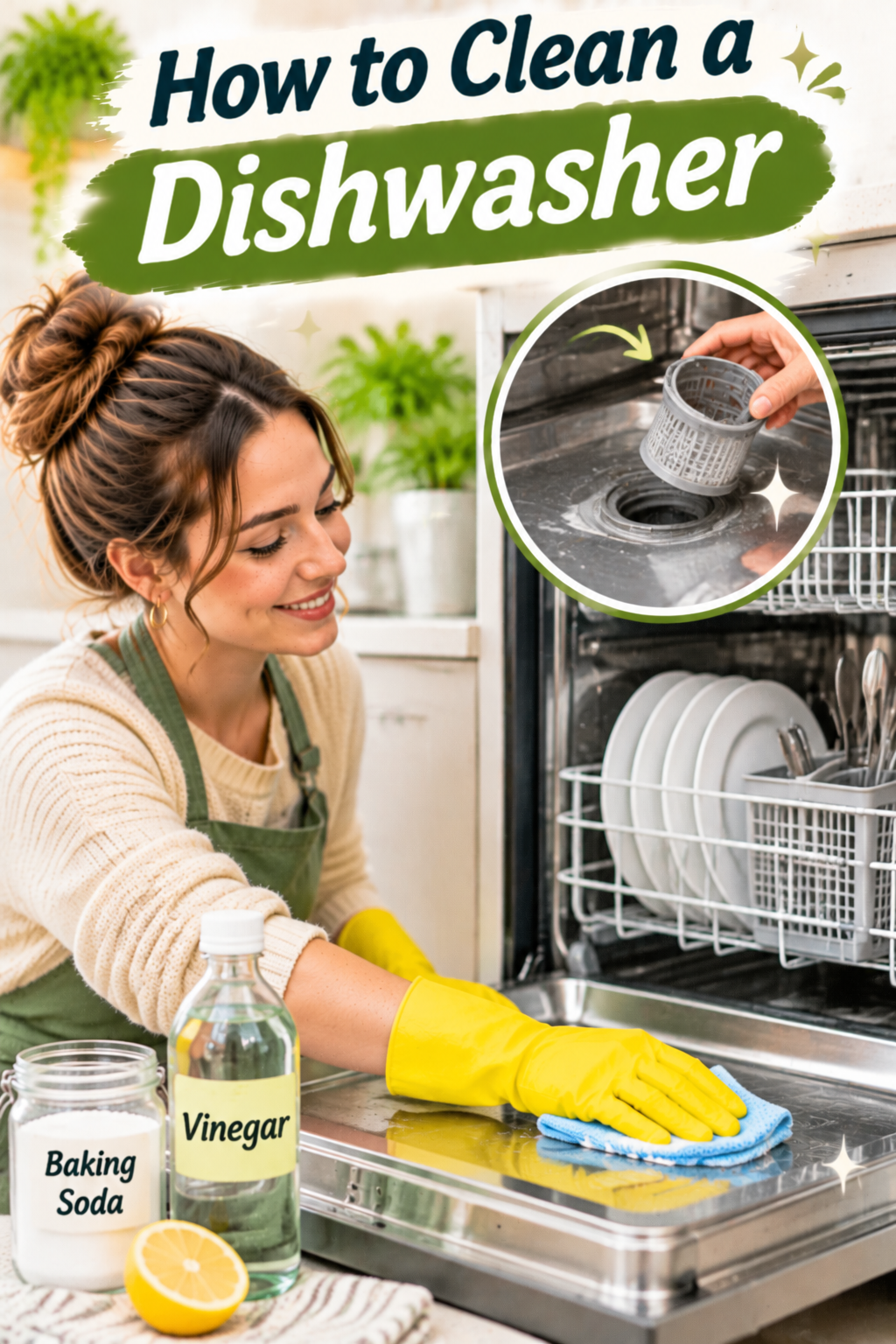
To clean a dishwasher, clear the drain area, rinse and gently brush the filter, unclog the spray arms, wipe the door gasket and edges, then run an empty hot cycle with a dishwasher cleaner (or, occasionally, a cup of white vinegar). Here’s the full step-by-step method, how often to do each part, and what never to put in the tub.
Contents
A dishwasher spends its whole life full of hot water and soap, so it’s easy to assume it cleans itself. It doesn’t. Food bits, grease, detergent residue and hard-water minerals collect in the filter, the spray arms and the corners of the door, until you notice a sour smell or a gritty film on glasses.
The fix takes about 30 minutes of hands-on time, plus one empty cycle. This guide walks through how to clean a dishwasher from the bottom up: the filter, the spray arms, the door and gasket, and the interior. It also covers the safety rules most quick hacks skip, like why bleach and vinegar should never meet and why some stainless tubs shouldn’t see bleach at all.
Signs Your Dishwasher Needs Cleaning
You don’t need to wait for a bad smell. Any of these is a good reason to clean it this week:
- A musty or sour odor when you open the door, especially after it has sat closed for a day or two.
- Gritty dishes or leftover specks on plates and glasses. GE Appliances specifically lists a drop in wash performance or gritty-feeling dishes as a sign the filters need cleaning.
- Standing water in the bottom after a cycle ends, which often points to a clogged filter or drain area.
- White film or spots on glassware and the tub walls, a common sign of hard-water mineral buildup.
What You’ll Need
- Your dishwasher’s owner’s manual (or the model number, so you can look it up online)
- A soft brush, such as an old toothbrush
- A soft sponge and a microfiber cloth
- Warm water and a little dish soap
- A toothpick or wooden skewer for spray-arm holes
- A dishwasher cleaner tablet or packet, or distilled white vinegar
- Baking soda (optional, for deodorizing)
- Rubber gloves
Skip wire brushes, steel wool and scouring pads. Whirlpool and GE Appliances both warn that abrasive tools can damage dishwasher filters.
How to Clean a Dishwasher, Step by Step
Work from the bottom up. Cleaning the filter and spray arms first means the final cleaning cycle actually rinses grime away instead of recirculating it.
Step 1: Empty it and clear the bottom
Unload any dishes and pull out the bottom rack. Look around the drain area for anything that shouldn’t be there: bits of food, soggy paper from jar labels, fruit pits, bone fragments, or broken glass. Maytag recommends clearing out exactly this kind of debris as the first step of a deep clean. Wear gloves and pick up glass carefully rather than sweeping it with your hand.
Step 2: Remove and clean the filter
The filter is the single most important part of this job. Most newer dishwashers have a removable filter at the bottom of the tub, usually under the lower spray arm. Some older models and a few current ones use self-cleaning filtration with no removable filter, so check your manual before you start pulling on parts.
Designs vary, but a common setup looks like this:
- Twist out the upper filter. On many Whirlpool and GE models, you turn the cylindrical filter about a quarter turn counterclockwise and lift it out.
- Lift out the lower filter or mesh plate. Whirlpool describes grasping the lower filter, lifting slightly and pulling it forward. Some GE models use retaining posts you twist to release a flat fine filter.
- Rinse under warm running water. Most soil comes right off.
- Gently brush stubborn spots. Use a soft brush or sponge and a little warm, soapy water for stuck food or chalky hard-water deposits. No scouring pads.
- Reinstall it and lock it in. Whirlpool notes that if the upper filter turns freely, it isn’t locked in place.
Don’t run the dishwasher with the filter missing or loose. Whirlpool warns that operating without the filters properly installed can damage the machine. If your model has a “Clean Filter” reminder light, your manual will explain how to reset it after cleaning.
For a filter that hasn’t been cleaned in a long time, Samsung suggests soaking removable parts like the filter overnight in distilled white vinegar to loosen mineral deposits and grime. Rinse well before putting it back.
Step 3: Unclog the spray arms
Spray arms push water through small holes. When those holes clog with food or minerals, the dishes they’re aimed at come out dirty.
- Spin each arm by hand. It should turn freely without catching on anything.
- Look at the holes. If any are blocked, gently poke the debris out with a toothpick or wooden skewer. Avoid metal tools that could widen or scratch the openings.
- On many models, the lower arm lifts or unclips and the upper arm unscrews or unclips from under the top rack. If yours come off easily (your manual will say), rinse them inside and out at the sink, or soak them in white vinegar to dissolve mineral crust, as Samsung suggests for removable nozzles.
- Snap or screw them back on and give them another spin.
Step 4: Wipe the door, gasket and edges
The cleaning cycle doesn’t reach everything. The bottom edge of the door, the sides of the door that sit outside the tub, and the rubber gasket all trap drips and food splatter that the spray never hits.
- Dip a soft cloth or sponge in warm, soapy water and wipe the gasket all the way around, getting into the folds.
- Use the soft brush along the bottom edge of the door and the hinge area, where gunk tends to collect.
- Wipe around the detergent dispenser and the rinse-aid cap.
Step 5: Run a cleaning cycle on the empty tub
Now that the filter and arms are clear, run a hot cycle on the empty dishwasher to break down grease and mineral film on the walls. You have two main options.
Option A: A dishwasher cleaner. Maytag says purpose-made cleaner tablets are designed to remove limescale and mineral buildup and are its first-choice cleaning method. Follow the package directions; many go in the detergent dispenser or the bottom of the tub with a Normal or hot cycle. If your model has a Self Clean or Machine Clean cycle, your manual will tell you when and how to use it.
Option B: White vinegar, occasionally. If you don’t have a cleaner on hand, set a lidless, dishwasher-safe container of white vinegar upright on the rack of the empty dishwasher and run a hot cycle with no detergent. Maytag suggests two cups on the lower rack with heated dry turned off. Samsung suggests an 8-ounce cup in the lower basket with the Sanitize cycle, which it says reaches 163°F during the final rinse. Use the amount and cycle your own manual recommends.
Vinegar is acidic, and Maytag cautions that using it too often could cause damage, so save it for occasional deep cleans and confirm your manual allows it. For more ways to use it around the house (and the places it does harm), see our guide to cleaning hacks with vinegar.
Step 6: Deodorize with baking soda (optional)
If a smell lingers after the vinegar cycle, Maytag recommends sprinkling about one cup of baking soda across the bottom of the tub and running a separate short hot cycle. Don’t combine the two in the same cycle. Maytag says to run vinegar and baking soda separately.
Step 7: Clean the outside
Finish with the door panel and controls. Wipe them with a soft, damp cloth and a drop of mild detergent, then dry. On a stainless steel front, wipe in the direction of the grain and skip abrasive cleaners, which can scratch the finish. Our guide on how to clean stainless steel appliances covers the streak-free method in detail. Go easy on the control panel: spray cleaner onto the cloth, not directly onto the buttons.
How Often to Clean Each Part
There’s no single schedule for every machine, because it depends on your model, how often you run it and how hard your water is. These ranges come from manufacturer guidance and are a good starting point:
| Task | How often | Notes |
|---|---|---|
| Check the drain area for debris | Weekly, or after any big load | Takes 30 seconds; catches glass and label scraps early |
| Clean the filter | About every 1–3 months | GE suggests every other month or more with heavy use; Whirlpool says cleaning the dishwasher about every 30 days helps performance |
| Run a cleaning cycle | About monthly with a cleaner tablet | Maytag suggests about monthly with tablets, less often with vinegar and baking soda |
| Check spray arms | Every few months | Sooner if top-rack or bottom-rack dishes come out dirty |
| Wipe the gasket and door edges | Every week or two | Quick wipe during your kitchen reset |
An easy way to remember is to add “dishwasher filter” to the monthly section of your deep cleaning checklist.
Dishwasher Cleaning Safety Rules
Never mix bleach with vinegar or other cleaners
This is the most important rule here. The Washington State Department of Health warns that mixing bleach with acids gives off chlorine gas, and mixing it with ammonia produces toxic chloramine gases. Vinegar is an acid, and the department lists automatic dishwasher detergents and rinses among the products that can contain acids. So if you ever use bleach in a dishwasher, don’t use it in the same cleaning session as vinegar, other cleaners, or a cycle with detergent, and follow your manual. Maytag likewise says not to use bleach at the same time as vinegar or baking soda.
Check your tub before using bleach at all
Many dishwashers have stainless steel tubs, and bleach can damage them. Samsung says not to use bleach in a dishwasher with a stainless steel interior because it may damage or discolor it, and Maytag says bleach can damage a stainless steel tub or stainless steel parts. For most people, a dishwasher cleaner or occasional vinegar cycle is the simpler, safer choice.
More quick safety notes
- Wear gloves when reaching into the drain area. Broken glass and sharp bone fragments end up there.
- Keep cleaner tablets and detergent pods in their original containers, out of reach of kids and pets.
- Don’t use dish soap in the dishwasher instead of dishwasher detergent. It makes far too many suds.
- Don’t operate it with parts missing. Filters and spray arms should be fully reinstalled and locked before you start a cycle.
- Your manual wins. If anything here conflicts with your manufacturer’s instructions, follow the manufacturer.
Troubleshooting Common Problems
It still smells after cleaning
Re-check the filter and the area beneath it, since that’s where most odors start. Wipe the gasket folds again and run the baking soda cycle. Between loads, Whirlpool suggests running a Rinse Only or Rinse and Hold cycle (on models that have one) if dirty dishes will sit for a while, to keep odors from building up.
There’s white film on glasses
That’s usually hard-water minerals. A descaling cleaner or an occasional vinegar cycle helps clear the tub, and keeping the rinse-aid dispenser filled helps with spotting. If the film is heavy, check your manual for a water hardness setting.
Keep It Clean Longer
- Scrape, don’t pre-rinse. Whirlpool says it isn’t necessary to wash or rinse dishes first, but you should scrape off large food particles. Bones, toothpicks and labels go in the trash.
- Peek at the filter monthly. It takes two minutes once you know how it comes out.
- Leave the door cracked for a bit after unloading, if it’s safe in your home, so the tub can dry.
- Fold it into your routine. Our kitchen cleaning hacks show how to fit small jobs like this into a nightly reset.
Your washing machine collects the same kind of hidden gunk. If your laundry smells musty too, follow our guide on how to clean a washing machine.
Frequently asked questions
What is the best way to clean a dishwasher?
How often should I clean my dishwasher filter?
Can I use vinegar to clean my dishwasher?
Is it safe to put bleach in a dishwasher?
Why does my dishwasher smell even though I run it every day?
The Bottom Line
Learning how to clean a dishwasher comes down to the parts the cycle can’t clean on its own: the filter, the spray arms and the door gasket. Clear those out, run an empty hot cycle with a dishwasher cleaner or an occasional cup of vinegar, and repeat about once a month. Keep bleach away from vinegar and other cleaners, check your manual before using bleach in a stainless tub, and your dishes will come out cleaner.
Keep reading: kitchen cleaning hacks and our deep cleaning checklist.
Sources
- GE Appliances: Dishwasher – How to Clean Fine and Ultra Fine Filters
- Whirlpool: How to Clean the Dishwasher Filters
- Whirlpool: Cleaning the Filter – Dishwasher
- Samsung US: Routine and deep clean your Samsung dishwasher
- Maytag: How to Deep Clean a Dishwasher
- Washington State Department of Health: Dangers of Mixing Bleach with Cleaners