

Quick answer
Stainless steel shows every fingerprint, but it is easy to clean once you know two rules: go with the grain, and skip the abrasives. Here is the streak-free method.
Contents
Stainless steel looks sleek until the first set of fingerprints lands on it. Then it shows every smudge, streak and water spot. The good news: it is one of the easiest surfaces to get gleaming, as long as you follow two rules.
Rule one: always wipe with the grain. Rule two: skip anything abrasive. Get those right and stainless steel cleans up fast and stays shiny. Here is the full method, what to use, what to never use, and how to keep fingerprints away.
Find the Grain First
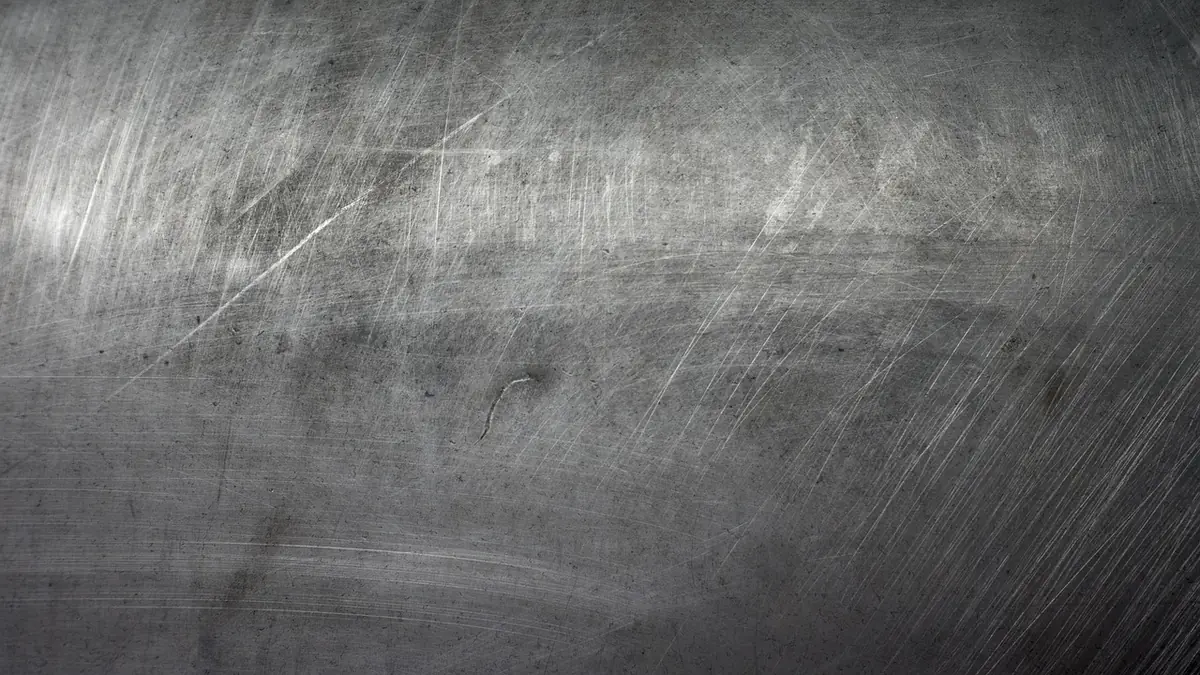
Stainless steel has a direction, like wood grain. Look closely and you will see fine lines running either horizontally or vertically. Always wipe along those lines, never against them or in circles. Wiping across the grain traps grime in the texture and leaves streaks.
This one habit matters more than which cleaner you use.
The Everyday Clean (Streak-Free in 2 Minutes)
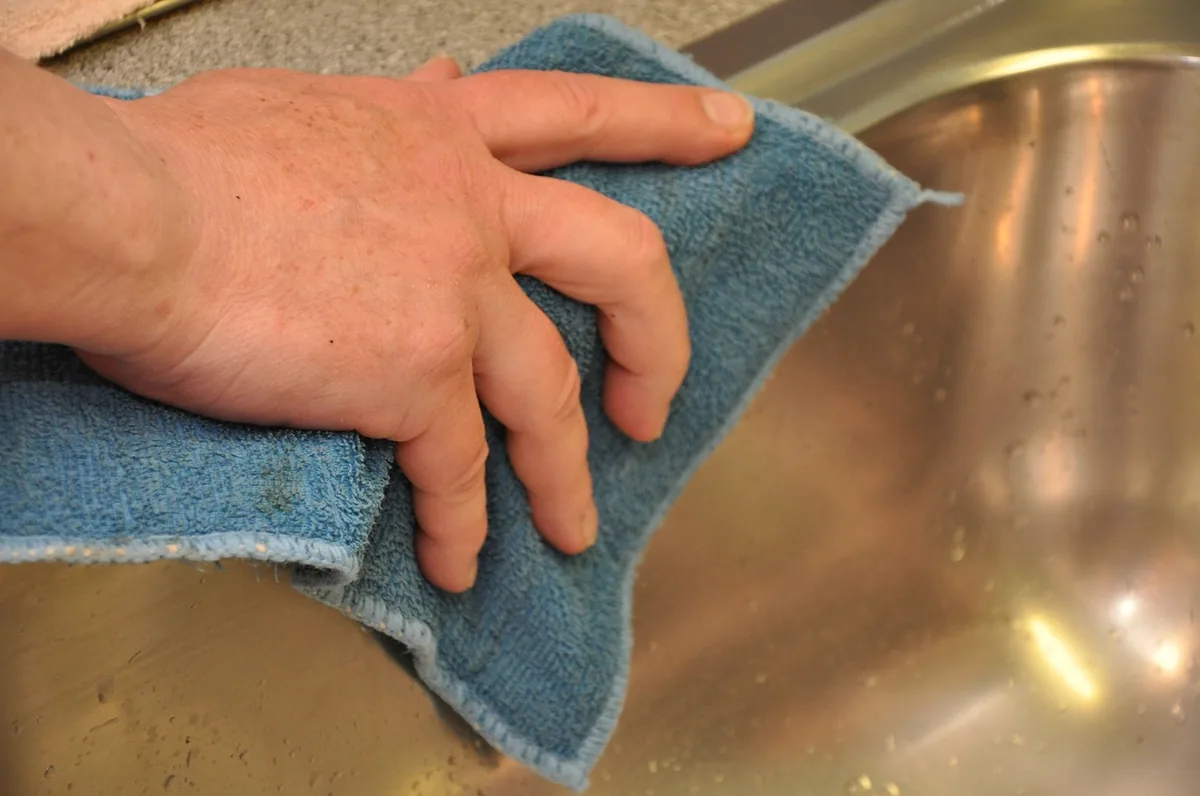
For daily fingerprints and smudges:
- Wipe the surface with a damp microfiber cloth, following the grain, to lift loose grime.
- For greasy spots, add a drop of dish soap to warm water and wipe again with the grain.
- Rinse the cloth and wipe once more with clean water to remove any soap.
- Buff dry with a second, dry microfiber cloth, still with the grain. Drying is what removes streaks and water spots.
That is it. Most of the time, warm water, a little dish soap and two microfiber cloths are all you need. For the rest of the kitchen, our kitchen cleaning hacks use the same gentle approach.
What Cleans Stainless Steel
| Cleaner | Best for | How to use |
|---|---|---|
| Warm water + dish soap | Everyday grime and grease | Wipe with the grain, rinse, buff dry |
| White vinegar (diluted 1:1) | Water spots, light film | Spray, wipe with grain, then buff dry |
| Glass cleaner | Light fingerprints | Spray a cloth (not the appliance), wipe with grain |
| A few drops of oil | Shine and smudge resistance | Buff a tiny amount in after cleaning |
A 1:1 vinegar spray is excellent for cutting water spots and daily film. Spray it on a cloth or lightly on the surface, wipe with the grain, then dry. Our vinegar cleaning guide covers where else it shines, and our natural cleaning recipes include a stainless-steel polish.
The Oil Trick for a Showroom Shine
After cleaning and drying, put a few drops of olive oil or mineral oil on a clean microfiber cloth and buff it along the grain. It fills the fine texture, boosts the shine, and makes the surface more resistant to new fingerprints. Use a tiny amount; too much leaves a greasy film.
What to Never Use on Stainless Steel
Some common products quietly damage the finish:
- Abrasive pads or steel wool. They scratch the surface, and scratches can rust.
- Gritty scouring powders. Same problem; they dull and scratch.
- Bleach and chlorine cleaners. Chlorine can corrode and stain stainless steel. If any splashes on, rinse it off right away.
- Ammonia-based glass cleaners, used heavily. Light use on a cloth is fine, but harsh ammonia can dull the finish over time.
- Dirty or colored rags. They leave lint and can transfer dye. Stick to clean microfiber.
When choosing any cleaner, milder is better for the finish and for your air (EPA Safer Choice).
Tackle Tougher Spots
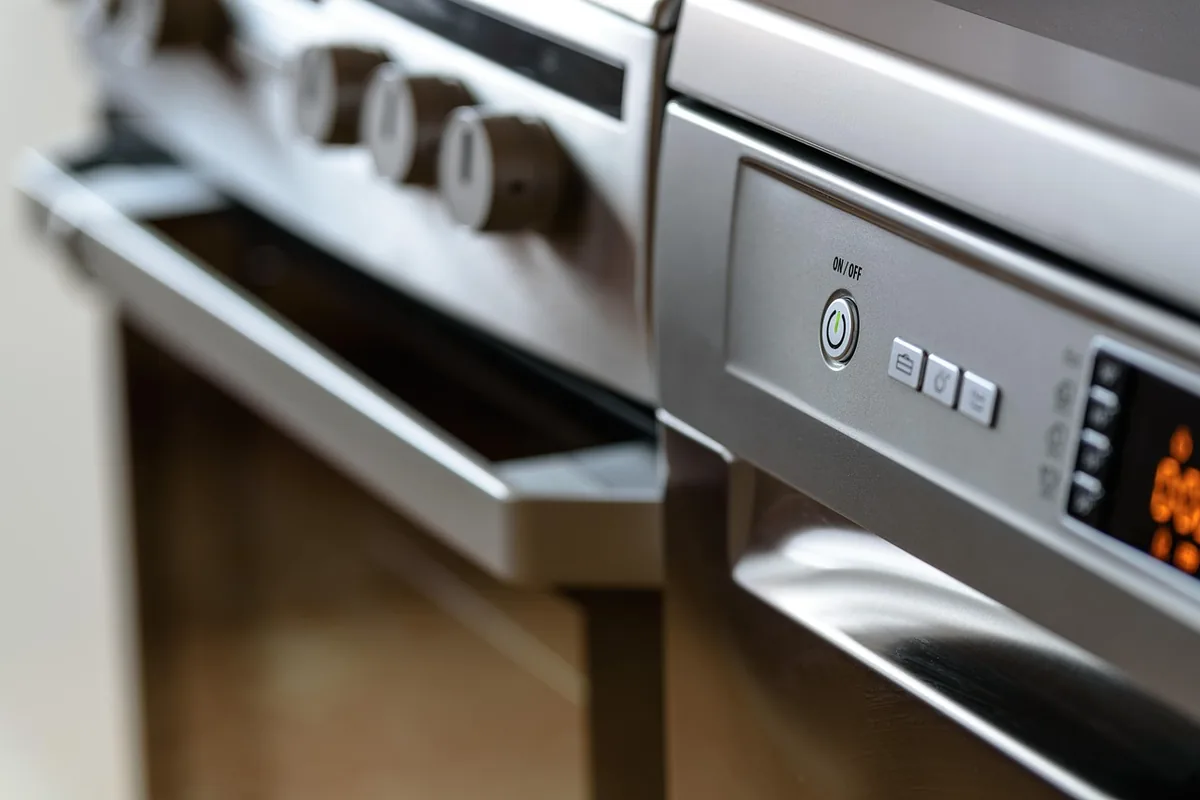
- Baked-on grease (oven, range hood): make a paste of baking soda and water, apply it with the grain, wait a few minutes, then wipe and rinse. Baking soda is gentle enough not to scratch. More in our baking soda cleaning hacks.
- Hard water spots: a 1:1 vinegar spray dissolves them. Wipe with the grain and buff dry.
- Sticky residue or labels: a little rubbing alcohol on a cloth lifts adhesive without harming the steel.
How to Keep Fingerprints Away
- Buff a few drops of oil in after cleaning, as above.
- Wipe the handles and high-touch spots daily with a dry microfiber cloth.
- Keep a dedicated cloth nearby so a quick swipe is easy.
- Dry any water splashes promptly to prevent spots.
These small habits mean you rarely need a deep clean. For the once-in-a-while reset of the whole kitchen, see our deep cleaning checklist.
Frequently asked questions
How do I clean stainless steel without streaks?
Can I use vinegar on stainless steel?
What should I never use on stainless steel?
Why does my stainless steel look streaky after cleaning?
How do I keep fingerprints off stainless steel?
The Bottom Line
Stainless steel is easy once you know the two rules: always wipe with the grain, and never use anything abrasive. Warm water and dish soap handle everyday grime, a 1:1 vinegar spray lifts water spots, and a few drops of oil buffed in afterward keep fingerprints away. Skip the steel wool and bleach, buff everything dry, and your appliances will stay gleaming. For the rest of the kitchen, our kitchen cleaning hacks keep every surface easy.

1 thought on “How to Clean Stainless Steel Appliances (No Streaks or Fingerprints)”