Quick answer
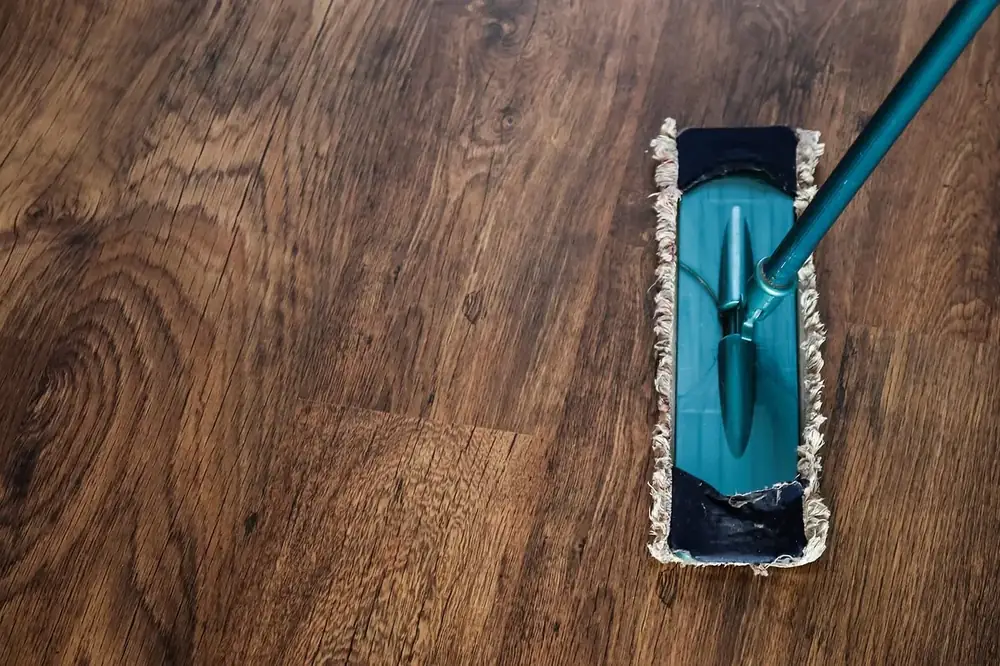
How to clean hardwood floors: sweep or dust mop every day, vacuum once a week on the bare-floor setting with the beater bar off, and clean once a month with a cleaner made for your floor’s finish, using a barely damp (never wet) mop. Wipe spills right away with a dry or slightly damp cloth. Skip steam mops, wet mops, vinyl or tile cleaners, furniture polish and “restorer” products. In winter, stop salt and snow at the door with mats inside and out, and keep indoor humidity between 30% and 50%.
Contents
Hardwood floors take a beating between Thanksgiving and New Year’s. Guests walk in with wet boots, kids and dogs track in snow and road salt, and the furnace runs nonstop and dries the air. The good news is that wood floors are easy to keep clean once you know what they like (a dry dust mop) and what they hate (standing water, steam and the wrong cleaner).
This guide walks you through exactly how to clean hardwood floors day to day, how to do a safe monthly deep clean, and how to handle winter salt, spills and scratches. The advice is based on guidance from the National Wood Flooring Association (NWFA), the trade group for the wood flooring industry, plus university extension research on deicing salts.
First, Know What Finish Is on Your Floor
The finish, not the wood, is what you’re really cleaning, so it decides which products are safe. The NWFA’s homeowner handbook lists the details worth recording for your floor: whether it was finished on site or at the factory, the finish type (natural oil, oil-based, solvent-based, water-based or wax) and the sheen (NWFA).
- Ask the source. If you had floors installed or refinished, the NWFA says your flooring professional can provide or recommend a cleaner made for that finish (NWFA).
- Check the manufacturer. For prefinished or engineered floors, the flooring brand’s care page usually names the cleaner it approves. When cleaning a surface-finished floor, the NWFA says to follow the manufacturer’s recommendations (NWFA).
- Not sure? The NWFA suggests asking at a reputable flooring store for a recommendation (NWFA).
Most modern floors have a surface finish such as polyurethane. Wax floors are different, and the NWFA notes that if a wax floor dulls, you should try buffing it instead of adding more wax (NWFA).
What You’ll Need
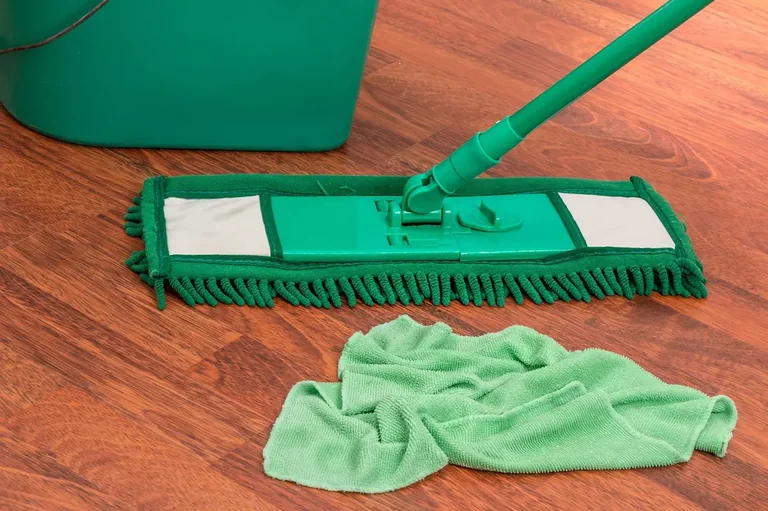
- A soft-bristle broom or a dry microfiber dust mop, which the NWFA recommends for routine sweeping (NWFA).
- A vacuum with a bare-floor setting, or one where you can turn the beater bar off (NWFA).
- A wood floor cleaner made for your floor’s finish (NWFA).
- A flat microfiber mop you can use barely damp, plus a few clean microfiber cloths for spills.
- Felt furniture pads and a couple of doormats or breathable rugs for the entry.
Notice what’s missing: no bucket of sudsy water and no steam mop. Both put too much moisture on the floor, which we’ll get to below.
Daily and Weekly Cleaning: Sweep, Dust Mop and Vacuum
Grit is the real enemy. Dirt that gets tracked in is dragged across the floor and can wear down the finish or cause scratches, which is why the NWFA recommends sweeping or using a soft microfiber dust mop daily and vacuuming on the bare-floor setting once a week or as needed (NWFA). A vacuum with the beater bar turned off pulls dirt and grit from between the boards without scuffing them (NWFA).
How to Dust Mop Like a Pro
- Start at the far side of the room and work toward the door.
- Push the dust mop in one direction and swivel it to turn. Keep the head on the floor until you’re finished, because lifting it early releases dust and lint back into the air (NWFA via CNET).
- Gather the line of dirt where you stop with a small brush and dustpan (NWFA via CNET).
- Shake the mop head out into a trash bag (or toss a washable pad in the laundry) so you don’t spread yesterday’s dirt.
Hit the entryway, kitchen and the path to the couch every day during the holidays. Quieter rooms can wait for the weekly vacuum. If you want a simple way to fit this in, add it to your weekly cleaning schedule.
How to Clean Hardwood Floors Once a Month
Sweeping removes loose dirt, but it won’t lift the film from footprints, pet paws and kitchen splatters. That’s what the monthly clean is for. The NWFA’s recommended schedule is: sweep or dust mop daily, vacuum weekly and clean with a wood floor cleaner monthly (NWFA).
- Clear the floor. Pick up rugs, chairs and small furniture. Lift heavy pieces instead of sliding them across the boards (NWFA).
- Dust mop or vacuum first. Cleaning over grit just grinds it into the finish.
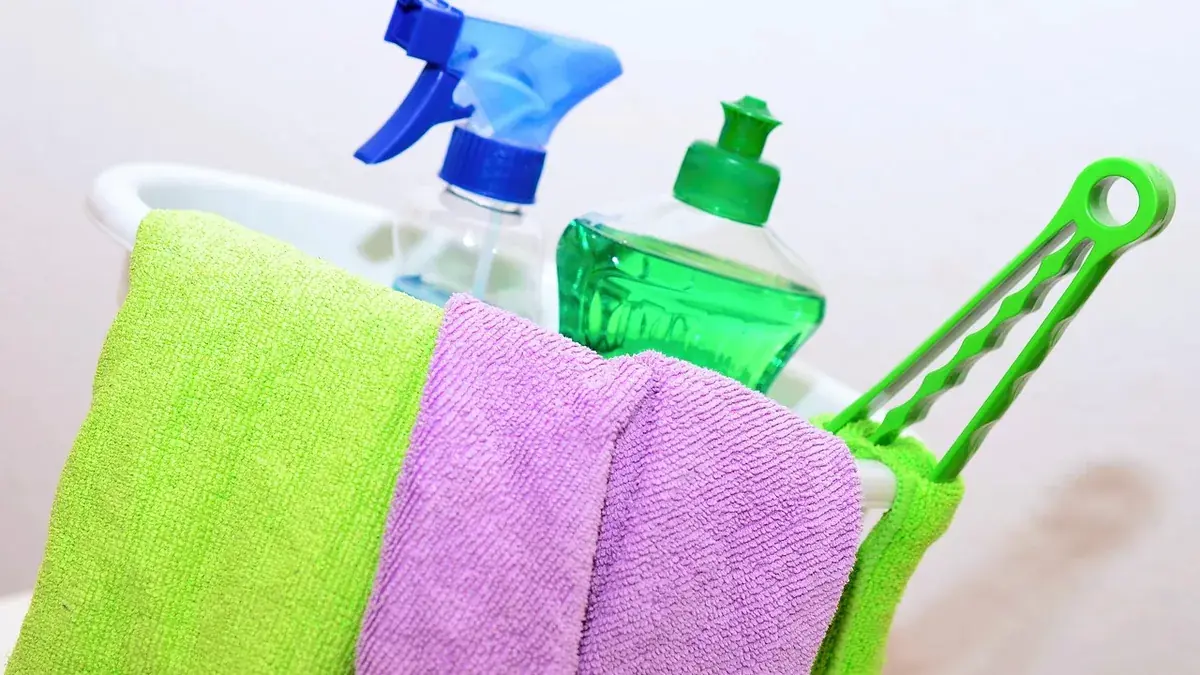
- Apply your wood floor cleaner. Use a product made specifically for your floor’s finish and follow the label directions (NWFA) (NWFA via CNET). Mist a small section at a time rather than pouring it on.
- Mop with a barely damp pad. The NWFA says you can generally use a dampened (near dry) mop to maintain a wood floor, but excessive moisture can dull the finish and even damage the wood (NWFA).
- Work with the grain in small sections and keep the pad moving so nothing puddles.
- Let it dry completely before you put rugs and furniture back.
Doing a bigger pre-holiday reset? This fits right into our deep cleaning checklist and our two-week holiday cleaning checklist.
What Not to Use on Hardwood Floors
Most hardwood damage comes from good intentions: too much water or the wrong product. The NWFA’s list of things to avoid is short and clear:
- Wet mops and steam mops. Water and steam can dull the finish and, over time, damage the wood itself (NWFA) (NWFA).
- Vinyl or tile cleaners. Don’t use them on wood floors (NWFA).
- Self-polishing acrylic waxes. They make wood slippery and dull quickly (NWFA).
- Wood furniture polish. It can make the floor dangerously slippery and damage the finish (NWFA).
- Mass-market “rejuvenators,” polishes and restorers. The NWFA recommends avoiding them and using a cleaner recommended by your installer or floor manufacturer instead (NWFA).
What about vinegar? It’s a great cleaner for a lot of things, but its acid can dull a wood finish, which is why hardwood is on our list of surfaces to skip in cleaning hacks with vinegar. Stick with a cleaner made for your finish unless your floor’s manufacturer specifically says otherwise.
How to Clean Spills, Sticky Spots and Pet Accidents
Speed matters more than product. The NWFA says to clean spills immediately with a dry or slightly damp cloth (NWFA). A damp cotton or microfiber cloth is ideal for spot cleaning (NWFA via CNET).
- Blot liquid up with a dry cloth. Don’t spread it around.
- For sticky spots like spilled cider or gravy, mist a little wood floor cleaner on a cloth (not on the floor) and wipe.
- Dry the spot right away with a clean cloth.
- For pet accidents, blot fast and wipe with your floor cleaner. If you see dark staining or the boards start to lift, call a flooring pro, since that usually means moisture got below the finish.
Spill on a rug instead? Our guide on how to get stains out of carpet covers wine, gravy and candle wax.
Winter Care: Salt, Snow and Dry Air
Winter is the hardest season on wood floors. Pets, kids and everyone else track in mud, snow, water and salt, and the NWFA warns that salt tends to leave a white, abrasive residue that can scratch the floor’s surface (NWFA). University of Arizona Extension researchers note that indoor surfaces get dulled and need more frequent cleaning where deicing salts are used outside. Rock salt (sodium chloride) and potassium chloride are relatively easy to remove, but calcium and magnesium chloride leave a greasy film that takes wet cleaning with a detergent to remove (University of Arizona Extension).
Stop Salt and Snow at the Door
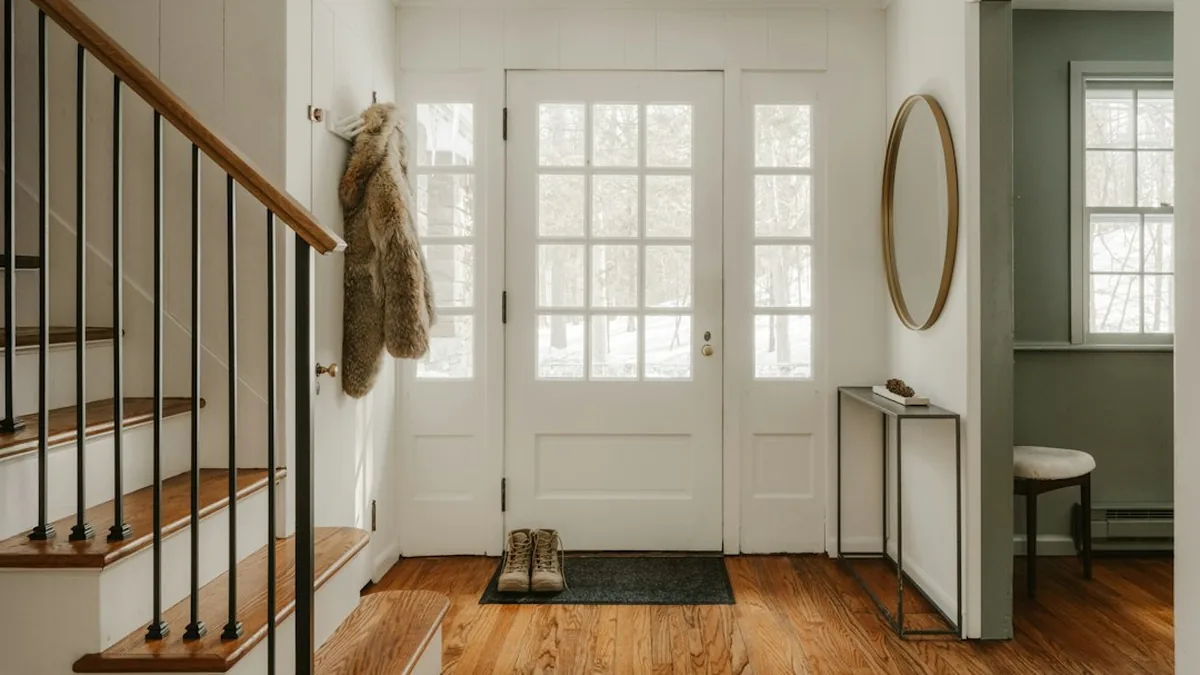
- Use mats outside and inside. The NWFA recommends placing multiple welcome mats outside and inside each entrance and asking everyone to wipe their shoes (NWFA).
- Choose breathable rugs at doorways and in high-traffic areas (NWFA).
- Make a boot spot. A boot tray by the door keeps dripping snow off the wood. Our entryway organization ideas show easy ways to set one up.
- Wipe puddles right away. If you see a puddle, soak it up with a towel and don’t let it sit (NWFA).
How to Get Salt Residue Off Hardwood Floors
- Dust mop or vacuum first to pick up loose salt crystals, which act like sandpaper underfoot. The NWFA says to take extra care cleaning salt so it doesn’t scratch the surface (NWFA).
- Spray your wood floor cleaner on a microfiber cloth or pad, not directly on the floor.
- Wipe the white haze, rinsing or switching to a fresh cloth as it picks up residue. Calcium and magnesium chloride films may take a second pass (University of Arizona Extension).
- Buff the spot dry with a clean cloth.
Keep Humidity Between 30% and 50%
Wood reacts to the air around it. When the heat runs all winter, wood floors lose moisture and shrink, which can open up gaps between boards or even splits. The NWFA says these seasonal gaps are normal if they close up again, and that you can minimize them by keeping your home between 60 and 80 degrees Fahrenheit and between 30% and 50% humidity year-round (NWFA). Its handbook suggests using a humidifier through the winter months (NWFA). If you run one, keep it clean with our guide on how to clean a humidifier, and see how to winterize your home for the rest of your cold-weather prep.
How to Protect Hardwood Floors From Scratches

According to the NWFA, most scratches happen in the finish, not the wood itself, and they can be prevented or minimized with a few habits (NWFA):
- Put stick-on felt protectors under furniture legs (NWFA).
- Use throw rugs at all entryways (NWFA).
- Keep pets’ nails trimmed (NWFA).
- Avoid walking on wood floors in sports cleats or high heels (NWFA).
- Pick heavy furniture up instead of sliding it, especially when you rearrange for holiday guests (NWFA).
- Consider a UV coating on sunny windows, since UV rays can bleach hardwood over time (NWFA via CNET).
Renting? These habits also help protect your deposit. See our cleaning hacks for renters for more damage-free tips.
When Cleaning Isn’t Enough: Recoating and Refinishing
If your floor still looks dull after a proper monthly clean, the finish is probably worn. The NWFA says dull floors can be renewed by recoating, which means applying a new coat of finish (NWFA). Its maintenance schedule calls for a maintenance coat every 3 to 5 years and a full sand and refinish every few decades, depending on wear (NWFA). Scratches in the finish can be fixed with a maintenance coat, while deeper scratches in the wood need sanding and refinishing by a professional (NWFA).
Hardwood Floor Cleaning Checklist
- Every day: sweep or dust mop high-traffic areas, and wipe up spills and puddles right away.
- Every week: vacuum on the bare-floor setting with the beater bar off.
- Every month: clean with a wood floor cleaner made for your finish, using a barely damp mop.
- All winter: mats inside and outside each door, a boot tray, quick salt cleanup and humidity between 30% and 50%.
- Always: felt pads under furniture, no steam mops, no wet mops, no vinyl or tile cleaners, no furniture polish.
- Every 3 to 5 years: ask a pro about a maintenance coat if the floor looks dull.
Frequently asked questions
What is the best way to clean hardwood floors?
Can you use a steam mop on hardwood floors?
Can I clean hardwood floors with vinegar?
How do you get salt stains off hardwood floors?
How often should you clean hardwood floors?
The Bottom Line
Learning how to clean hardwood floors comes down to keeping them dry and grit-free: a dust mop every day, a vacuum every week, a barely damp clean with the right product every month, and no steam, no soaking and no polish. Add mats at the door and steady humidity this winter, and your floors will look good for the holidays and for years after.
Sources
- National Wood Flooring Association (NWFA): Maintenance
- NWFA: Consumer Outreach Toolkit (wood floor care FAQ and maintenance schedule)
- NWFA: Homeowner’s Handbook to Real Wood Floors
- NWFA: Avoiding Winter Weather Woes
- NWFA: Spring Cleaning: Top Tips for Caring for Wood Floors
- NWFA (via CNET): How to Keep Your Hardwood Floors Looking Fantastic
- University of Arizona Cooperative Extension: Deicing Compounds