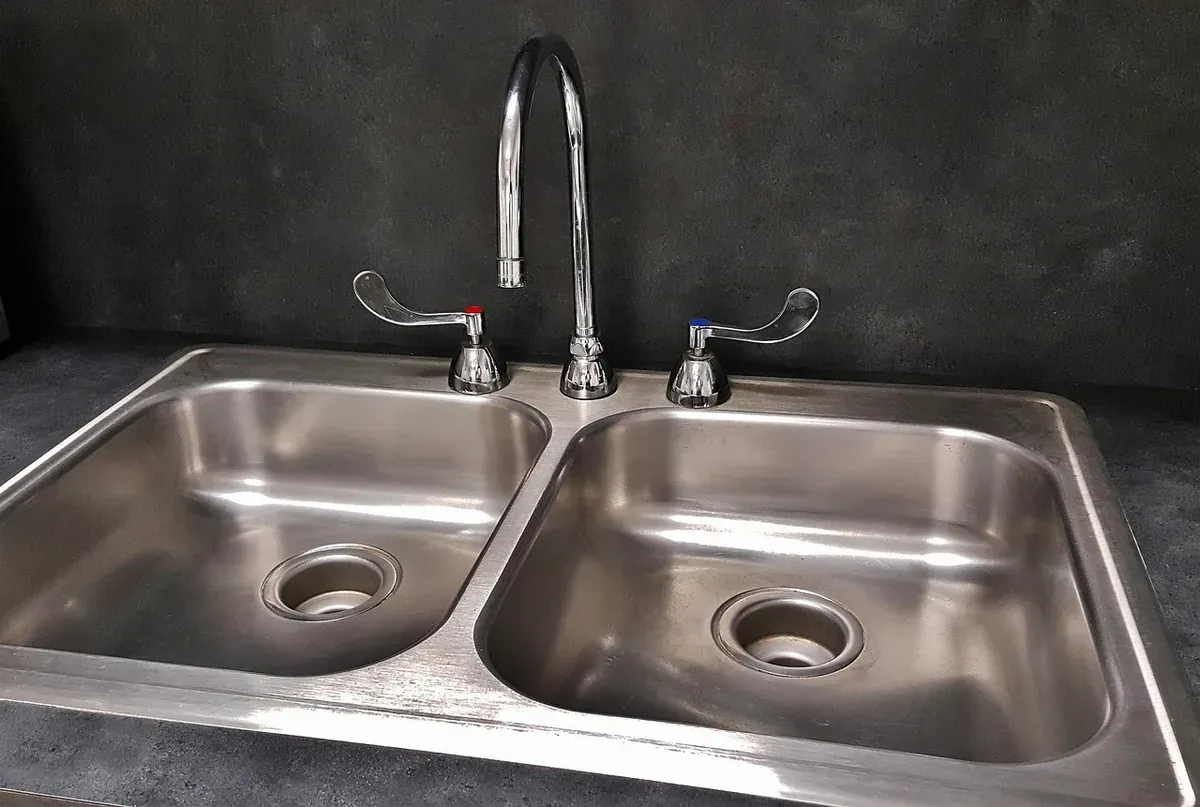
Quick answer
How to clean a garbage disposal: turn it off and cut the power, then scrub the underside of the rubber sink baffle (splash guard) and the upper lip of the grinding chamber with a scouring pad or old toothbrush. Put the stopper in, fill the sink halfway with warm water and mix in 1/4 cup of baking soda. Turn the disposal on and pull the stopper at the same time so the rush of water flushes out loose food. To freshen it, run cold water and grind a few ice cubes with lemon or lime wedges. Never put your hand inside the disposal.
Contents
If your kitchen sink smells a little funky, the garbage disposal is usually the reason. Food scraps cling to the rubber splash guard and the walls of the grinding chamber, and after a few weeks that buildup starts to smell. Add a big holiday meal to the mix and the disposal suddenly has to deal with peels, grease, bones and starchy leftovers all at once.
That is not a small problem. Roto-Rooter says the day after Thanksgiving, which plumbers call “Brown Friday,” brings about 50% more service calls than an average Friday, and calls run about 21% higher across the four-day holiday weekend. Clogged kitchen sinks and jammed garbage disposals are among the most common problems it sees (Roto-Rooter).
The good news is that learning how to clean a garbage disposal takes about 10 minutes, and you probably already have everything you need. This guide walks you through the cleaning steps from disposal maker InSinkErator, plus what to keep out of the disposal, how to fix a jam and how to clear a clogged drain.
Why Your Garbage Disposal Smells
A garbage disposal has no sharp blades (see the myths in our vinegar cleaning hacks). Most food leaves with the water, but small bits get left behind. InSinkErator says food particles accumulate in the grind chamber and on the sink baffle over time, and that an odor from the disposal is usually a sign of that food buildup (InSinkErator manual).
The baffle is the rubber splash guard you see when you look down the drain. Its underside is the spot most people never clean, and it is often the main source of the smell (InSinkErator FAQ). Grease makes it worse. InSinkErator recommends a disposal cleaner, degreaser or deodorizer when odors come from grease buildup (InSinkErator manual).
Using the disposal regularly also helps. InSinkErator calls disposals very low-maintenance appliances and says frequent use helps clear out excess food scraps that collect in the chamber (InSinkErator FAQ).
What You Need
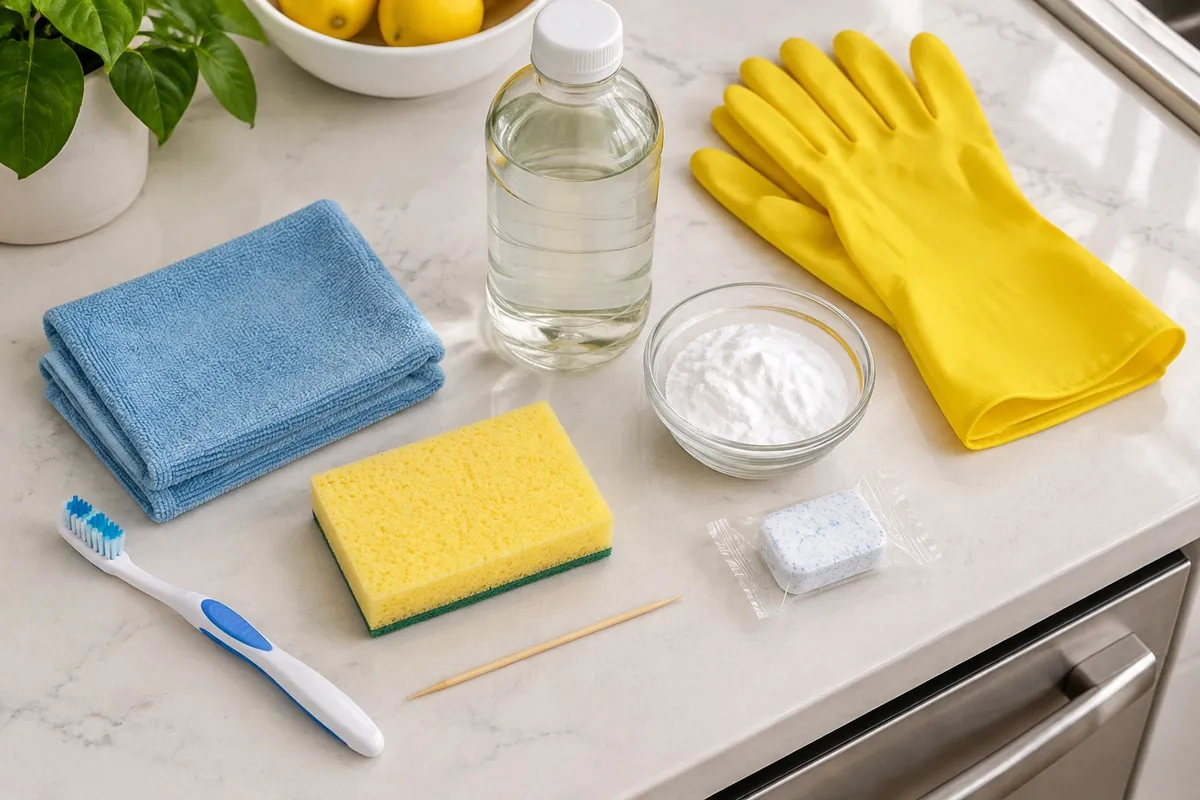
- Baking soda (1/4 cup)
- A sink stopper
- A scouring pad, sponge or old toothbrush for the baffle
- Rubber gloves
- Ice cubes and a few lemon or lime wedges for freshening
- Long-handled tongs or pliers, in case something has fallen in
- A flashlight
- The disposal’s jam-buster wrench, or a 1/4-inch Allen wrench, if it is jammed
Baking soda is one of the most useful things in a cleaning cabinet. See more ways to use it in our guide to cleaning hacks with baking soda.
How to Clean a Garbage Disposal Step by Step
These steps follow the cleaning instructions in the InSinkErator care manual and support pages (InSinkErator manual) (InSinkErator).
- Turn it off and cut the power. Switch the disposal off. If it plugs in under the sink, unplug it. If it is hard-wired, turn off the breaker. InSinkErator’s instructions start with turning off the power supply (InSinkErator).
- Scrub the baffle. Reach through the sink opening and scrub the underside of the rubber baffle and the inside of the upper lip of the grind chamber with a scouring pad (InSinkErator). Many baffles lift out. InSinkErator says a removable baffle can be cleaned by hand or in the dishwasher, but do not run the disposal without it in place (InSinkErator manual).
- Fill the sink. Put the stopper in the drain and fill the sink about halfway with warm water.
- Add baking soda. Mix 1/4 cup of baking soda into the water.
- Flush it. Restore power, then turn the disposal on and pull the stopper at the same time. The rush of water washes loose food particles out of the chamber (InSinkErator manual).
- Rinse. Let cold water run for a few more seconds after the sink drains.
Plan to do this whenever you notice a smell, and after any big cooking day. If you are deep cleaning the whole kitchen, pair this job with our dishwasher cleaning guide and fridge cleaning steps.
Do not stick your hand in the disposal
This is the one rule you never break. InSinkErator says not to put your hand in the garbage disposal at any time, even with the power off (InSinkErator). Use tongs or pliers to pull out anything that falls in, and keep the stopper in the drain when the disposal is not running so objects cannot drop inside (InSinkErator manual).
How to Freshen a Garbage Disposal With Ice and Citrus
For a quick refresh between deep cleanings, InSinkErator suggests turning the disposal on, running a medium stream of cold water and dropping in ice cubes mixed with lemon or lime wedges (InSinkErator FAQ). Its manual also says grinding citrus peels helps freshen drain smells, and hard items like ice create a scouring action inside the grind chamber (InSinkErator manual).
InSinkErator notes there are better ways to clean the disposal than ice alone, so treat this as a freshener, not a replacement for scrubbing the baffle (InSinkErator FAQ). For another option, our natural cleaning recipes include frozen lemon-juice cubes you can keep in the freezer.
What Not to Put Down a Garbage Disposal
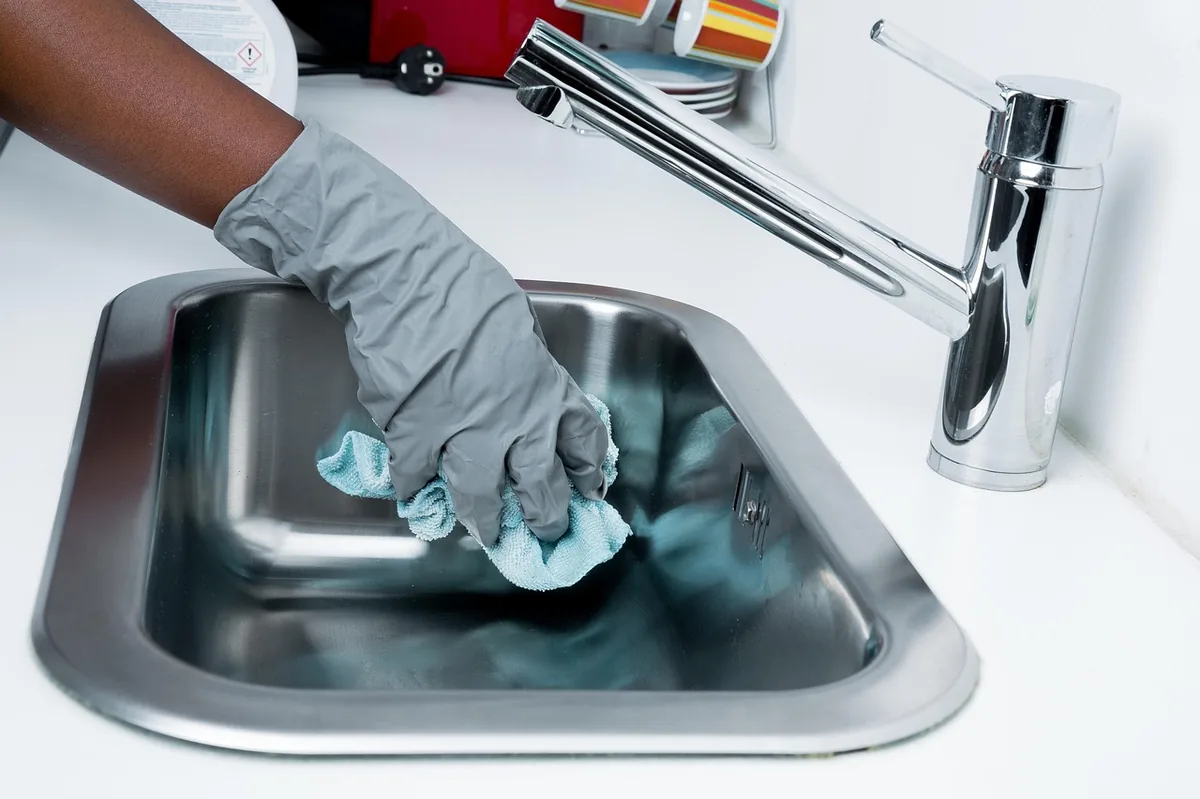
Cleaning helps, but what you put in matters more. This list combines InSinkErator’s care manual and Roto-Rooter’s Thanksgiving advice:
- Grease, fat and oil. InSinkErator says never pour grease or fat down your disposal or any drain because it can build up in pipes and cause blockages. Put it in a jar or can and throw it in the trash (InSinkErator manual). Roto-Rooter adds that turkey drippings may go in as a liquid but cool and cling to pipe walls (Roto-Rooter).
- Stringy, fibrous scraps. InSinkErator warns against large amounts of fibrous material like corn husks and artichokes (InSinkErator manual). Roto-Rooter lists celery and other stringy scraps that can tangle around disposal parts (Roto-Rooter).
- Starchy foods. Roto-Rooter says potatoes, rice and pasta can form a thick, sticky mixture that contributes to drain clogs, and suggests keeping potato peels and large amounts of starchy food out of the disposal (Roto-Rooter).
- Poultry skin and bones. Roto-Rooter says bones can damage or jam a disposal and poultry skin is hard to break down (Roto-Rooter). InSinkErator’s own manual says its units can grind small bones, so check your model’s manual. Either way, a turkey carcass belongs in the trash.
- Lots of eggshells or peels at once. InSinkErator says not to grind large amounts of eggshells and not to dump a lot of vegetable peels in at once. Turn on the water and the disposal first, then feed peels in gradually (InSinkErator manual).
- Non-food items and chemicals. No glass, china, plastic, metal (bottle caps, utensils), clam or oyster shells, hot grease or other hot liquids, caustic drain cleaners, paint, solvents or household chemicals (InSinkErator manual).
The easiest habit for a big holiday meal is the one Roto-Rooter recommends: scrape plates into the trash or compost before rinsing them in the sink, and wipe greasy pans with a paper towel before washing them (Roto-Rooter). Grease near a hot stove is also a fire risk, so read our kitchen fire prevention tips before the big cook.
How to Use a Garbage Disposal the Right Way
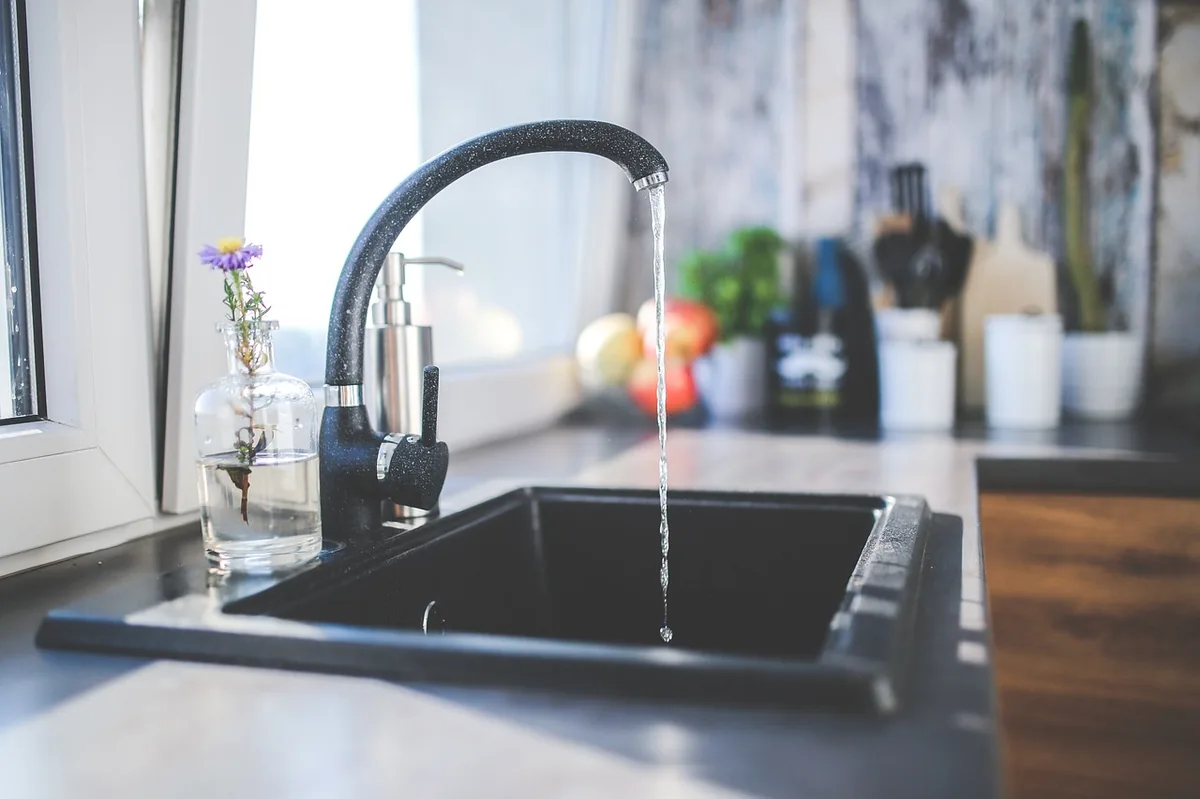
A disposal that is used correctly needs far less cleaning. InSinkErator’s operating instructions come down to a few habits (InSinkErator manual):
- Water first. Turn on the cold water, then turn on the disposal.
- Feed it slowly. Add food a little at a time while the disposal is running, never a full chamber before you flip the switch. Roto-Rooter gives the same advice (Roto-Rooter).
- Use cold water, not hot. InSinkErator says not to use hot water while grinding. Draining hot water into the disposal between grinding sessions is fine.
- Let it finish. Do not turn it off until grinding is done and you hear only the motor and water.
- Flush the line. Keep cold water running for several seconds after you turn it off.
- Keep the stopper in when you are done. It stops forks, rings and bottle caps from falling in.
For more small habits that keep the kitchen easy to clean, see our kitchen cleaning hacks.
How to Fix a Jammed or Humming Garbage Disposal
If the motor stops mid-grind or just hums, something is probably stuck. Here is InSinkErator’s fix for most of its models (InSinkErator manual) (InSinkErator):
- Turn off the disposal and the water. Make sure the switch is off. If the sink is full, let it drain or bail it out.
- Work the wrench. Find the hole dead center on the bottom of the disposal, under the sink. Insert the jam-buster wrench that came with it (a 1/4-inch Allen wrench also works) and crank it back and forth until it turns freely in full circles.
- Remove the object. Shine a flashlight into the disposal and pull out whatever caused the jam with tongs or pliers, never your fingers.
- Press reset. Let the motor cool for a few minutes, then gently push the small red reset button on the bottom of the unit. If it will not stay in, wait about 10 minutes and try again.
- Test it. Turn on the water, then the disposal. If it jams again, repeat the steps.
- Check the breaker. If the motor still will not run, look for a tripped circuit breaker or a blown fuse.
Some models (InSinkErator lists Builder Series, Amana and ES units) have no wrench hole. For those, turn everything off and rotate the turntable with a wooden spoon to free the jam (InSinkErator).
Can’t reach the reset button? Clear the cabinet with our under-sink organization ideas.
How to Unclog a Garbage Disposal Drain
If the disposal runs but the water will not drain, the clog is probably in the drain line past the disposal. InSinkErator suggests a simple test. Turn the disposal on and look for a whirlpool in the water. If you see one, you probably have a clogged drain line (InSinkErator).
- If you have a double sink, plug the other drain with a stopper.
- Fill the sink with about 4 inches of water.
- Place a plunger over the disposal opening, press down slowly and gently, then pull up quickly. Repeat several times.
- When the clog breaks free, run the water and the disposal for a minute or two (InSinkErator).
Skip harsh chemical drain cleaners. InSinkErator says not to put caustic drain cleaners or similar products into a disposal (InSinkErator manual), and Roto-Rooter advises against pouring chemical drain cleaners into standing water, especially if you might need a plumber (Roto-Rooter).
When to Call a Plumber
Call a pro if the plunger does not clear the sink, if several drains in the house are slow at the same time, or if you hear gurgling from toilets or drains. Roto-Rooter lists those as warning signs of a developing main sewer line problem (Roto-Rooter). It also suggests fixing slow drains before guests arrive, because a minor blockage can turn into a full clog when the house is busy (Roto-Rooter).
Frequently asked questions
How often should you clean a garbage disposal?
Can I clean a garbage disposal with baking soda?
Should you run hot or cold water with a garbage disposal?
Why is my garbage disposal humming but not working?
Can you put potato peels down the garbage disposal?
The Bottom Line
Knowing how to clean a garbage disposal is mostly about the baffle. Scrub the underside, flush with baking soda and warm water, freshen with ice and citrus, and keep grease, peels and bones out of the drain. Do those few things before and after the holiday meal and you can keep your kitchen sink off the Brown Friday list. For the rest of the house, work through our holiday cleaning checklist and our tips on cleaning stainless steel appliances.