
Quick answer
The most important holiday decorating safety tips: water a live Christmas tree every day and keep it at least 3 feet from fireplaces, heaters, candles and vents. Check every strand of lights for frayed wires or cracked sockets before you hang it, follow the label on how many strands you can connect, and turn lights off when you go to bed or leave home. Keep candles 12 inches from anything that can burn, use a sturdy ladder and a helper for high decorations, and make sure your smoke alarms work.
Contents
Thanksgiving is next week, and for a lot of families that means the boxes of lights, garland and ornaments come down from the attic the very same weekend. It’s one of the best parts of the season. It’s also when small hazards pile up fast: a tree drying out next to a heat vent, an old strand of lights with a pinched wire, a candle on a crowded mantel, or someone balancing on a dining chair to reach the top of the window.
This guide walks through practical holiday decorating safety tips for your tree, lights, candles, ladders and outdoor displays, plus a few things guests and kids add to the mix. Everything here is based on guidance from the National Fire Protection Association (NFPA), the U.S. Fire Administration (USFA) and the U.S. Consumer Product Safety Commission (CPSC).
Why Holiday Decorations Need a Safety Plan
Decorations are a real source of house fires and injuries every winter. NFPA reports that U.S. fire departments respond to an estimated average of 835 home fires per year that start with decorations, not counting Christmas trees (NFPA). Christmas trees add an average of 143 home fires a year, and NFPA notes that nearly half of them involve electrical problems, while a heat source too close to the tree causes nearly one in four (NFPA).
Injuries are even more common. CPSC estimates there are about 160 decorating-related injuries a day during the holiday season, and nearly half of them involve falls. In the 2023 holiday season, about 14,900 people were treated in emergency rooms for holiday decorating injuries (CPSC). None of this means you should skip the lights. It just means a few habits are worth building in from the start.
Christmas Tree Safety Tips
Choosing a live tree
A fresh tree is safer than a dry one. CPSC’s freshness test is simple: a fresh tree is green, its needles are hard to pull from the branches and don’t break when you bend them, the trunk is sticky with resin, and it shouldn’t drop many needles when you tap it on the ground (CPSC). The USFA recommends cutting the base of a natural tree and placing it in water (USFA).
Choosing an artificial tree
Look for a “Fire Resistant” label. CPSC points out that the label doesn’t mean the tree can’t catch fire, only that it resists burning better (CPSC). Don’t use electric lights on a metallic tree (CPSC).
Placing and caring for the tree
- Keep it 3 feet from heat. USFA advises keeping the tree at least 3 feet from fireplaces, radiators, space heaters, candles and heat vents (USFA).
- Water it every day. A dry tree can burn very hot and very fast (USFA). Heated rooms dry trees quickly, so CPSC recommends checking the water level daily and keeping the stand full (CPSC).
- Don’t block exits. Set the tree out of the main walkway and never in front of a doorway (USFA).
- Get rid of it on time. Take the tree down after Christmas or as soon as it’s dry (USFA). NFPA notes that 35% of Christmas tree fires happen in January, when trees have had weeks to dry out (NFPA).
If your tree sits near a drafty window or door, fixing the draft also helps keep the room warm without parking a space heater next to the branches. Our guide on how to stop drafts covers quick fixes.
Holiday Light Safety
Electrical distribution and lighting equipment are involved in two out of five home Christmas tree fires, according to NFPA (NFPA). A quick check before you hang anything prevents most problems:
- Inspect every strand, every year. Look for broken or cracked sockets, frayed or bare wires and loose connections. Throw out damaged sets instead of taping them (CPSC) (USFA).
- Buy tested lights. Use only lights tested by a nationally recognized testing laboratory, such as UL (USFA).
- Don’t over-connect. Read the manufacturer’s instructions for how many strands you can link (USFA). CPSC’s rule of thumb is to never string together more than three sets of incandescent lights (CPSC).
- Don’t overload outlets or run cords under rugs, where damage is hard to see (CPSC).
- Use the right extension cord, rated for the job and in good shape, with no cuts or fraying (CPSC).
- Turn them off. USFA advises against leaving lights on unattended (USFA), so switch them off at bedtime and when you leave the house.
Candle Safety During the Holidays

Candles are a holiday staple, and that’s exactly why December is risky. NFPA reports that candles start one-third of home decoration fires year-round, but that share jumps to 49% in December (NFPA). Christmas is also the peak day for candle fires (NFPA).
- Give them 12 inches of space. Keep candles at least 12 inches from anything that can burn, including garland, curtains, centerpieces and paper decorations (USFA).
- Use stable holders on a heat-resistant surface where kids and pets can’t knock them over (CPSC).
- Blow them out before you leave a room or go to bed (NFPA).
- Switch to flameless candles for windows, mantels and anywhere near greenery. They can look, smell and feel like real candles (USFA).
If wax does drip onto a rug during a party, our guide on how to get stains out of carpet walks through how to lift it without damaging the fibers.
Ladder and Hanging Safety
Falls are the single biggest category of decorating injuries, according to CPSC (CPSC). CPSC has specifically warned people to use caution when standing on a ladder or a chair to hang decorations (CPSC). A few common-sense habits help:
- Use a step ladder or extension ladder that fits the job, not a chair, stool or the arm of the couch.
- Set it on firm, level ground and have someone hold it while you work.
- Keep your body centered between the side rails instead of leaning out to reach the next hook.
- Wear shoes with good grip, and skip the roof or high gutters when it’s icy, wet or windy.
- Use plastic clips made for holiday lights instead of nails or staples, which can damage the wire insulation.
Outdoor Decorations and Holiday Home Security
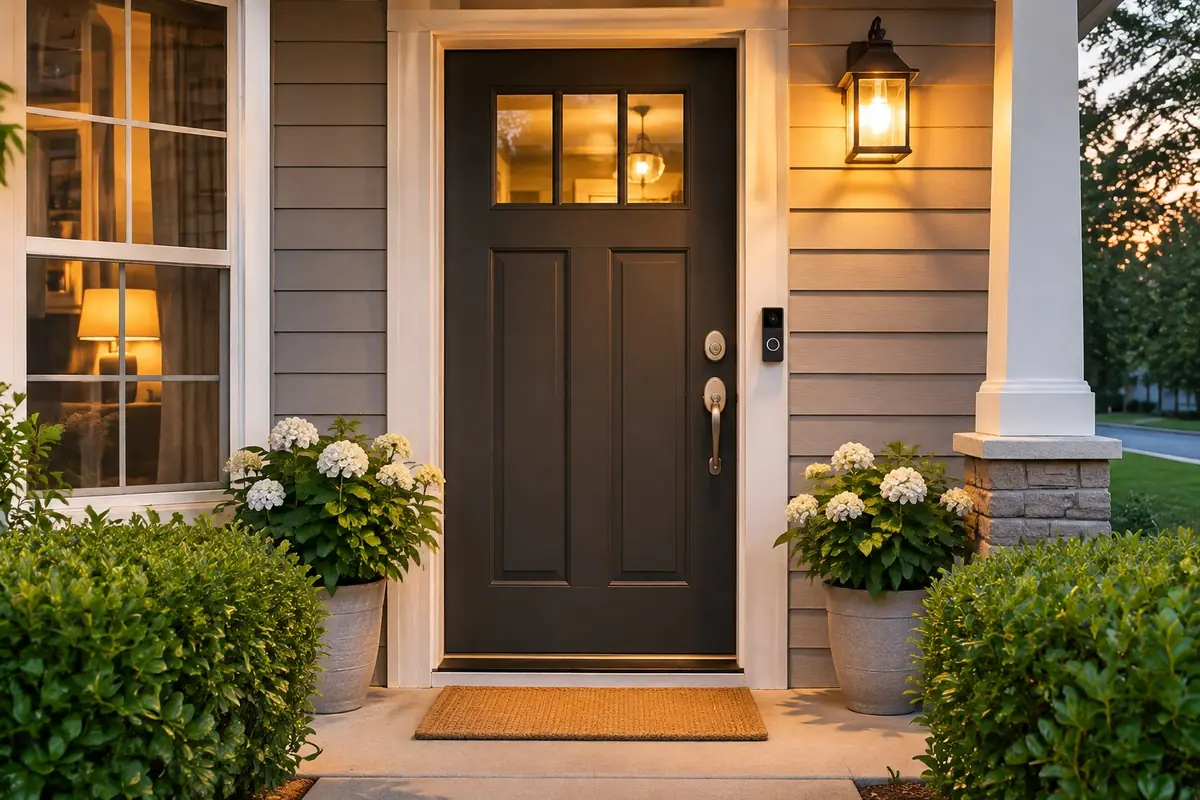
Outdoor displays face rain, snow and freezing temperatures, so they need gear made for it. CPSC advises checking that lights are certified for outdoor use and plugging them only into a ground-fault circuit interrupter (GFCI) protected outlet or a portable GFCI (CPSC). Use outdoor-rated extension cords, keep connections off the ground and out of puddles, and route cords where nobody will trip over them in the dark.
Lighting is also part of keeping your home secure. A bright porch and lit walkway make it easier for guests and delivery drivers to see where they’re going, and harder for anyone to approach the door unnoticed. Pair your display with the steps in our guides on how to secure a front door and how to prevent package theft, since holiday deliveries peak at the same time.

Timers are the easiest upgrade. Put indoor and outdoor lights on a plug-in or smart timer so they turn off overnight on their own, and so the house looks lived-in if you travel for the holidays. Our home security tips before vacation cover more ways to protect the house while you’re gone.
Fireplaces, Gift Wrap and Smoke Alarms
- Keep stockings, garland and greenery away from the firebox, and never hang anything flammable directly above an open fire.
- Don’t burn wrapping paper in the fireplace. CPSC warns it can ignite suddenly and cause a flash fire (CPSC).
- Clear the clutter. After gifts are opened, bag up paper, boxes and packaging and get them out of the living room. Our decluttering checklist helps you make room before new things come in.
- Test your smoke alarms. CPSC recommends working smoke alarms on every floor and in every bedroom, tested monthly (CPSC). Holiday weekend is a good reminder to push the test button.
If you’re also hosting the big meal, read our tips on how to prevent kitchen fires on Thanksgiving, since cooking fires peak on the same holidays (NFPA).
Decorating Safely With Kids, Pets and Guests
A house full of people changes the rules. CPSC suggests avoiding sharp, weighted or breakable decorations in homes with small children, keeping trimmings with small parts out of reach, and skipping decorations that look like candy or food (CPSC). Put fragile and heirloom ornaments on the upper branches, anchor a tall tree to the wall if you have climbers or a curious cat, and keep cords tucked behind furniture so nobody trips. Visiting guests won’t know your house, so leave a hallway light or nightlight on and keep walkways clear of decorations and gift piles. Our holiday cleaning checklist and guide to winterizing your home round out the prep.
Frequently asked questions
How far should a Christmas tree be from a fireplace or heater?
How many strands of Christmas lights can I connect together?
Is it safe to leave Christmas lights on overnight?
How often should I water a real Christmas tree?
Are flameless candles safer than real candles?
The Bottom Line
The best holiday decorating safety tips come down to a short routine: water the tree daily and keep it 3 feet from heat, inspect every strand of lights before it goes up, give candles 12 inches of space, use a real ladder with a helper, and turn everything off at night. Spend 20 minutes on those checks this weekend, and you can enjoy the lights from Thanksgiving through New Year’s without worrying about them.